
Stormwater Design and Neighbourhood Health in Ontario

Every time it rains in Ontario, millions of litres of water flow off rooftops, driveways, parking lots, and roads. Where that water goes, how fast it moves, and what it picks up along the way have direct consequences for the health of people living downstream. Stormwater design is one of those infrastructure topics that rarely gets public attention until something goes wrong, but it quietly shapes the safety, comfort, and long-term value of every neighbourhood in the province.
Why Stormwater Matters for Health
In natural landscapes, rain soaks into the ground, gets filtered through soil, and slowly feeds streams and aquifers. In developed areas, hard surfaces prevent infiltration. Water rushes across pavement, collecting motor oil, road salt, pesticide residues, pet waste, and sediment before entering storm drains that typically discharge directly into local waterways without treatment.
This untreated runoff degrades the rivers and lakes that many Ontario communities depend on for drinking water and recreation. It also creates flooding risks in neighbourhoods where drainage systems were not designed for the volume of rain that climate change is now delivering. Basement flooding, saturated yards, and overwhelmed sewer systems are not just property problems. They introduce mould, contaminated water, and psychological stress into homes.
According to the Insurance Bureau of Canada, water damage has become the leading cause of home insurance claims in the country, surpassing fire. Much of that damage traces back to how stormwater is managed at the neighbourhood scale.
Traditional Grey Infrastructure
For decades, Ontario municipalities relied almost entirely on grey infrastructure: concrete pipes, catch basins, storm sewers, and detention ponds. The goal was simple. Collect runoff and move it away from buildings as fast as possible. This approach works reasonably well for the storms it was designed to handle, but it has several limitations.
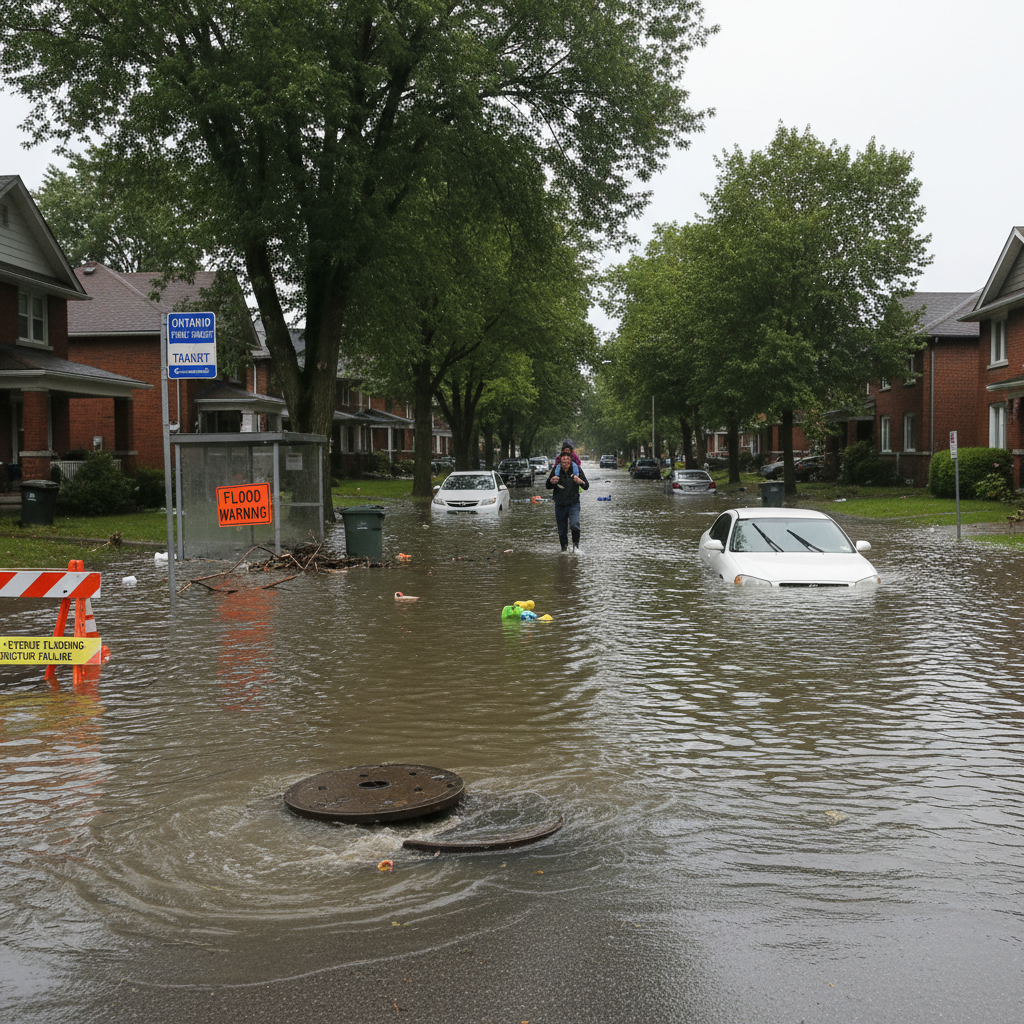
First, pipe-based systems have fixed capacity. When rainfall exceeds design standards, the system backs up and flooding occurs. Many older Ontario neighbourhoods have combined sewers that carry both stormwater and sanitary waste in the same pipe. During heavy rain events, these systems can overflow, sending raw sewage into basements and waterways.
Second, grey infrastructure does nothing to improve water quality. It simply relocates the problem. Polluted runoff that enters a storm drain exits at the other end just as polluted, often flowing directly into a creek or river.
Third, large detention ponds occupy valuable land, can create safety hazards, and often become breeding grounds for mosquitoes if not properly maintained.
Green Infrastructure Alternatives
Over the past fifteen years, Ontario has seen a growing shift toward green stormwater infrastructure, sometimes called low-impact development (LID). These techniques work with natural processes to manage rain where it falls, rather than piping it away.
Common green infrastructure features include:
- Bioswales are shallow, vegetated channels that slow runoff and allow it to soak into the ground. You will often see them running alongside parking lots or roads in newer Ontario developments.
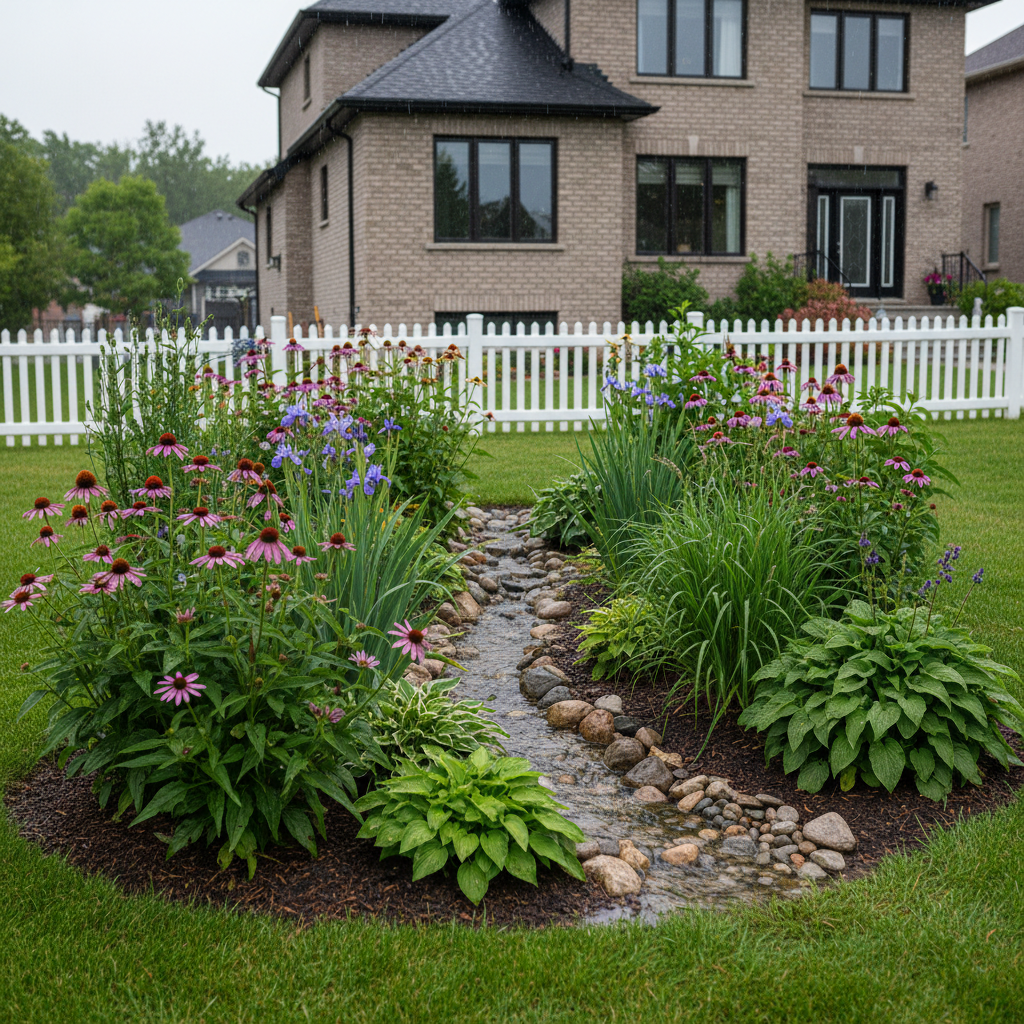
- Rain gardens are planted depressions designed to collect runoff from rooftops, driveways, or streets. Native plants with deep root systems help filter pollutants and encourage infiltration.
- Permeable pavement allows water to pass through the surface and into a gravel base below, reducing runoff volume significantly. It is increasingly used for parking areas and low-traffic residential streets.
- Green roofs absorb rainfall on building surfaces, reducing the volume that reaches the ground. They also help with building insulation and reduce the urban heat island effect.
- Rainwater harvesting systems capture roof runoff in cisterns or rain barrels for later use in irrigation, reducing both runoff and municipal water demand.
These features deliver multiple benefits. They reduce flooding, improve water quality, create habitat for pollinators, cool the surrounding air, and make neighbourhoods more attractive. Communities that invest in green infrastructure tend to see improvements in overall community health indicators over time.
What to Look for in Your Neighbourhood
If you are buying a home or assessing your current neighbourhood's stormwater resilience, there are practical things to check. Walk the area during or just after a heavy rain. Look for water pooling on streets, flowing toward foundations, or backing up from storm drains. These are warning signs.
Check whether the neighbourhood has a history of basement flooding. Your municipality's engineering department can often provide information about past flooding complaints by area. Insurance brokers who work in the region will also have useful insights.
Look at the ratio of hard surface to green space. A neighbourhood dominated by wide roads, expansive driveways, and minimal landscaping will generate far more runoff than one with mature tree canopy, gardens, and smaller building footprints. The presence of visible green infrastructure features, like bioswales, rain gardens, or permeable walkways, indicates that the developer or municipality took stormwater management seriously.
Ontario's Regulatory Framework
Stormwater management in Ontario is governed by a patchwork of provincial, regional, and municipal regulations. The Ministry of the Environment, Conservation and Parks sets high-level standards through documents like the Stormwater Management Planning and Design Manual. Conservation Authorities play a critical role, reviewing development applications and setting requirements for stormwater quantity and quality control within their watersheds.
Municipalities implement these requirements through official plans, zoning bylaws, and site plan agreements. The level of ambition varies. Some Ontario municipalities have adopted aggressive green infrastructure policies and offer incentives like stormwater credits for property owners who reduce runoff. Others still rely primarily on traditional approaches.
The Conservation Ontario website provides links to individual conservation authority websites where you can find watershed-specific information about stormwater requirements and flood risk mapping.
Climate Change and Future Risks
Ontario's rainfall patterns are shifting. Intense, short-duration storms are becoming more frequent, delivering more water in less time than older infrastructure was built to handle. The province's updated intensity-duration-frequency (IDF) curves reflect this trend, and many municipalities are beginning to design for larger storms than historical averages.
This means that neighbourhoods built twenty or thirty years ago may face increasing flood risk even if they had adequate drainage at the time of construction. Retrofitting older areas with green infrastructure, upgrading pipe capacity, and disconnecting downspouts from storm sewers are all strategies that municipalities and homeowners can pursue.
If you are evaluating a neighbourhood's environmental quality, pay particular attention to how the municipality is adapting its stormwater systems for future conditions, not just maintaining what already exists.
What Homeowners Can Do
Individual actions add up. Disconnecting downspouts from the storm sewer and directing them onto a lawn or rain garden reduces the load on municipal systems. Installing a rain barrel captures water for garden use. Replacing sections of paved driveway with permeable materials or planting beds reduces runoff from your property.
Some Ontario municipalities offer rebate programs for these kinds of improvements. Check with your local public works department to see what is available in your area. Even modest changes at the household level, multiplied across a neighbourhood, can meaningfully reduce flooding risk and improve local water quality.