
Cycling Infrastructure in Small Towns
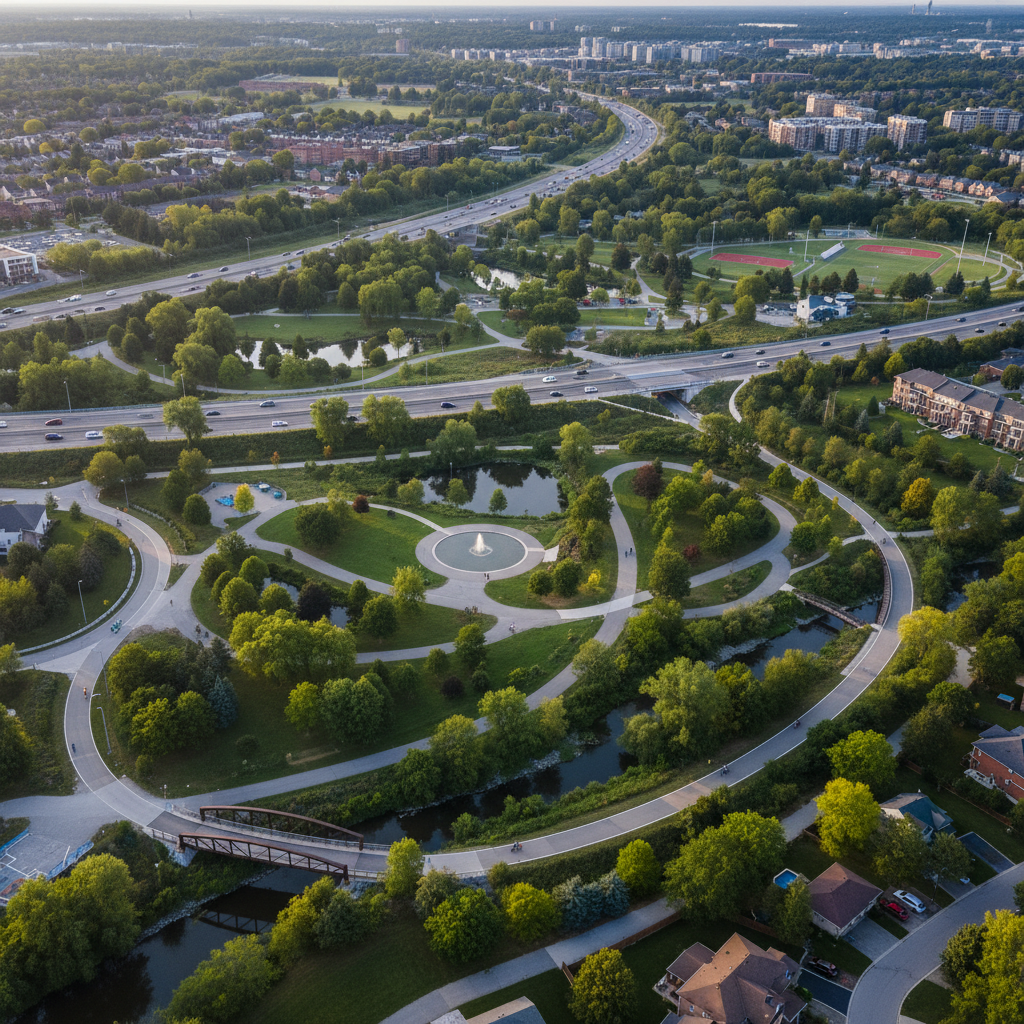
Small towns in Ontario have a natural advantage when it comes to cycling. Distances are short. Traffic volumes are lower than in cities. Many destinations, including the downtown core, schools, parks, and the library, are within a few kilometres of most homes. A ten-minute bike ride can cover the same ground as a twenty-minute walk or a five-minute drive followed by five minutes looking for parking. Yet many Ontario small towns have little or no cycling infrastructure, and cycling rates remain low despite the favourable conditions.
The gap between potential and reality is largely an infrastructure problem. People will cycle when they feel safe doing so. When the only option is riding on a busy highway shoulder or sharing a road with trucks, most people choose the car. Building even a basic cycling network can shift that equation and unlock health, environmental, and economic benefits that far outweigh the modest cost of the infrastructure.
Why Small Towns Are Different
The cycling infrastructure conversation in Canada tends to be dominated by big-city examples. Toronto's bike lane debates, Montreal's network of separated paths, and Vancouver's cycling culture get most of the attention. But the challenges and opportunities in a small Ontario town are fundamentally different from those in a major city.
The distances are smaller. In a town of 5,000 to 25,000 people, the longest typical trip, from the edge of the residential area to the downtown core, might be three to five kilometres. That is a comfortable ride for most adults and many children. The infrastructure needed to serve these trips does not have to be extensive. A few key connections can make a disproportionate difference.
Traffic speeds, not volumes, are often the primary barrier. A rural highway running through town with a speed limit of 50 or 60 km/h and no cycling provision is the most common obstacle. Even when traffic volume is modest, the speed differential between a cyclist and motor vehicles creates an uncomfortable and potentially dangerous situation. Solving this one problem, providing a safe route along or parallel to the main highway corridor, can open up cycling as a practical option for many trips.
Right-of-way availability is another small-town advantage. Many Ontario towns have abandoned rail corridors, hydro easements, river or creek corridors, and wide road allowances that can accommodate multi-use paths at relatively low cost. Converting a disused rail line to a paved path creates an instant cycling spine through the community, often connecting residential areas to the downtown and to regional trail networks.
What Works in Small Communities
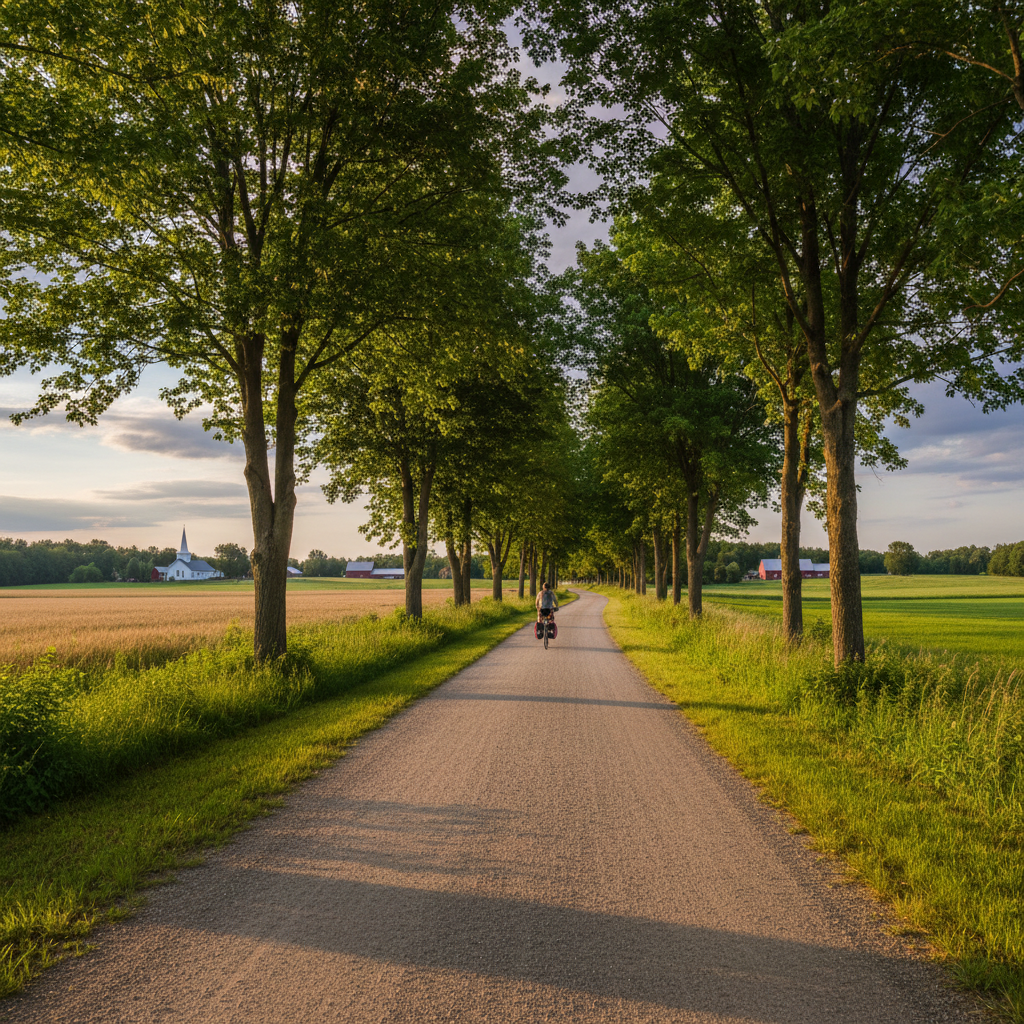
The most effective cycling investments in small towns are those that create connected, safe routes to the places people actually go. A beautiful trail to nowhere gets recreational use on weekends but does not change how people get around. A safe route from the residential neighbourhoods to the school, the grocery store, and downtown gets daily use and produces lasting mode shift.
Multi-use paths separated from the road are the gold standard for small-town cycling infrastructure. They serve cyclists, pedestrians, runners, and in winter, sometimes cross-country skiers. They feel safe for users of all ages and abilities, which is essential because the target audience is not athletic roadies in lycra but families, children, seniors, and everyday people running errands.
Where separated paths are not feasible, paved shoulders on main roads provide a significant improvement over no provision at all. A 1.5-metre paved shoulder is inexpensive to add during road resurfacing and gives cyclists a defined space that is separated from vehicle traffic by a painted line. It is not as comfortable as a separated path, but it is a practical solution that works within typical small-town budgets.
Low-traffic residential streets can function as cycling routes with minimal intervention. Sharrows (shared lane markings), wayfinding signs, and traffic calming at key intersections can designate a neighbourhood cycling route at very low cost. The key is connecting these quiet streets to destinations and to any higher-order cycling infrastructure that exists.
Bike parking matters more than people realize. A trip by bicycle starts and ends with parking the bike. If there is nowhere secure to lock up at the grocery store, the library, or the school, the practical utility of cycling drops sharply. Bike racks are inexpensive and can be added incrementally as cycling use grows. Covered parking at transit stops, if the community has transit connections, extends cycling's usefulness through light rain and shoulder seasons.
Connecting to Regional Networks
Many Ontario small towns sit along or near regional trail networks that offer cycling opportunities well beyond the town itself. The Trans Canada Trail, the Waterfront Trail, the Cataraqui Trail, and dozens of county and regional trails pass through or near small communities across the province. Connecting a town's internal cycling network to these regional routes multiplies the value of both.
For tourism-oriented communities, cycling infrastructure can be an economic development tool. Cycle tourism is a growing market, and towns that offer safe, attractive riding combined with services like cafes, accommodations, and bike repair attract spending that benefits local businesses. Communities along the Waterfront Trail and the Ottawa Valley rail trails have seen measurable economic benefits from cycling tourism.
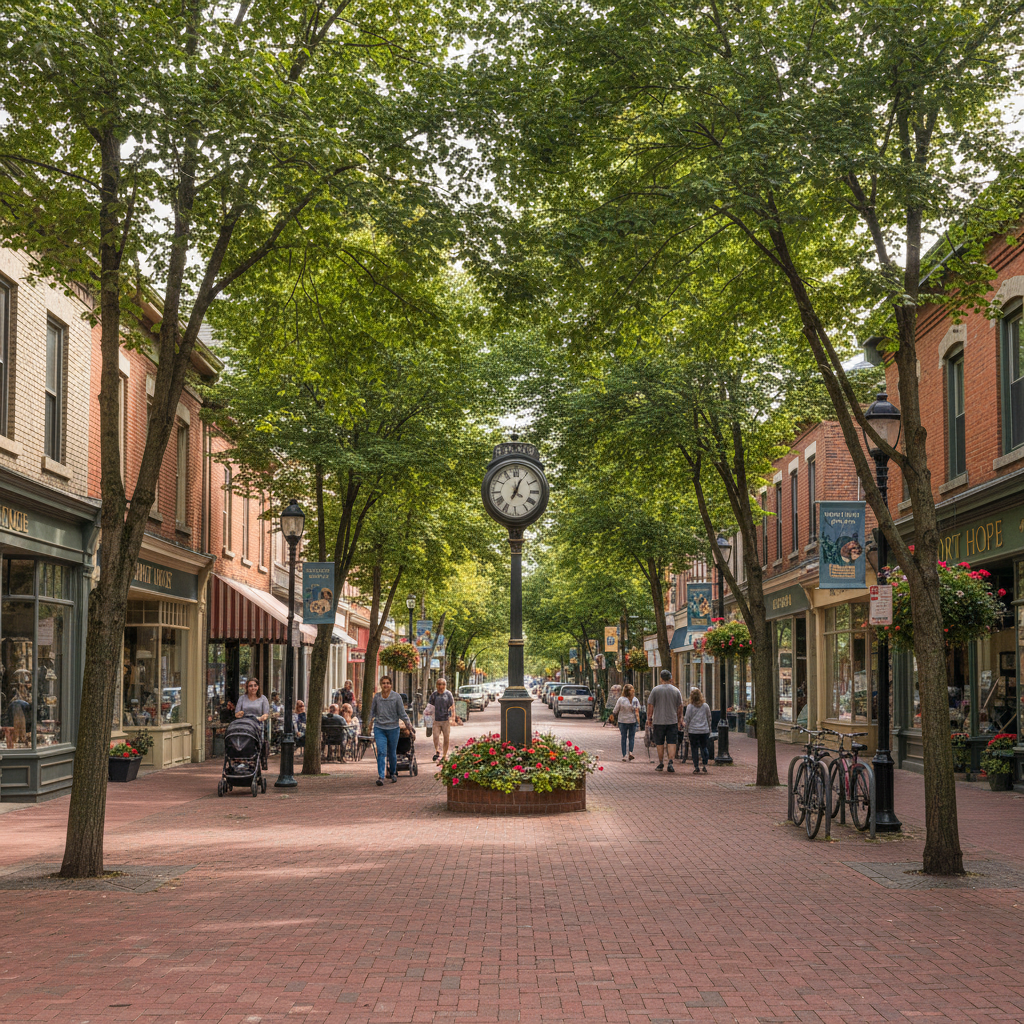
The connection between cycling infrastructure and walkable small-town life is strong. The same investments that make cycling practical, lower traffic speeds, separated paths, connected routes, and safe crossings, also improve the pedestrian experience. A town that builds for cycling builds for walking at the same time.
Overcoming Barriers
The most common objection to cycling infrastructure in small towns is cost. Municipal budgets are tight, and competing priorities are real. But cycling infrastructure is among the least expensive transportation investments a municipality can make. A kilometre of multi-use path costs a fraction of a kilometre of road widening. Paved shoulders are added during routine resurfacing at marginal additional cost. Bike racks cost a few hundred dollars each.
Provincial and federal funding programs can offset local costs. The Ontario Municipal Commuter Cycling Program, federal infrastructure grants, and programs like the Share the Road Cycling Coalition's bicycle-friendly communities program all provide resources and funding pathways for small-town cycling projects. Grants for active transportation infrastructure have been increasing in recent years as provincial and federal governments recognize the health and climate benefits.
Political will is often a bigger barrier than funding. Cycling infrastructure can be controversial in communities where it is perceived as serving only a small group of enthusiasts. Framing the investment in terms of health, safety, and family mobility can help build broader support. Parents who want their children to ride to school safely, seniors who want low-impact exercise options, and businesses that want foot and wheel traffic on main street are all constituencies that benefit from cycling infrastructure.
Winter is a real consideration in Ontario. Cycling drops significantly in winter months, and maintaining cycling infrastructure through the snow season adds cost. However, many multi-use paths can be maintained for winter walking and snowshoeing, providing year-round value. And the growing popularity of fat bikes and e-bikes is extending the cycling season for those willing to ride in cooler conditions. Winter maintenance of shared-use paths serves multiple user groups across the seasons.
Getting Started
If your community does not have a cycling network plan, advocating for one is a productive first step. A cycling master plan identifies the routes that would provide the greatest benefit, prioritizes investments, and creates a framework for incremental implementation over multiple budget cycles. Many Ontario communities have completed cycling plans, and examples from comparable towns provide useful models.
Start small and build momentum. A single high-quality project that connects a residential area to a key destination demonstrates what cycling infrastructure can do and builds public support for the next project. Success breeds success. A path that is well used generates demand for more paths.
Community engagement matters. Identify the routes where people already want to cycle but feel unsafe doing so. Talk to parents about school commutes, to seniors about access to the library and medical offices, and to downtown businesses about customer access. The answers will reveal where the greatest need and the greatest opportunity intersect.
Small-town Ontario has the geography, the distances, and the community character to be genuinely bicycle-friendly. The missing piece in most communities is a modest investment in infrastructure that makes cycling safe and comfortable for everyone, not just the confident few. That investment pays dividends in health, livability, and community connection that make it one of the smartest things a healthy community can do. The short distances and lower traffic of quieter streets mean that even modest improvements can shift how residents move through their daily lives.