
Flooding, Heat, Trees, and Air Quality: How They Connect in Ontario
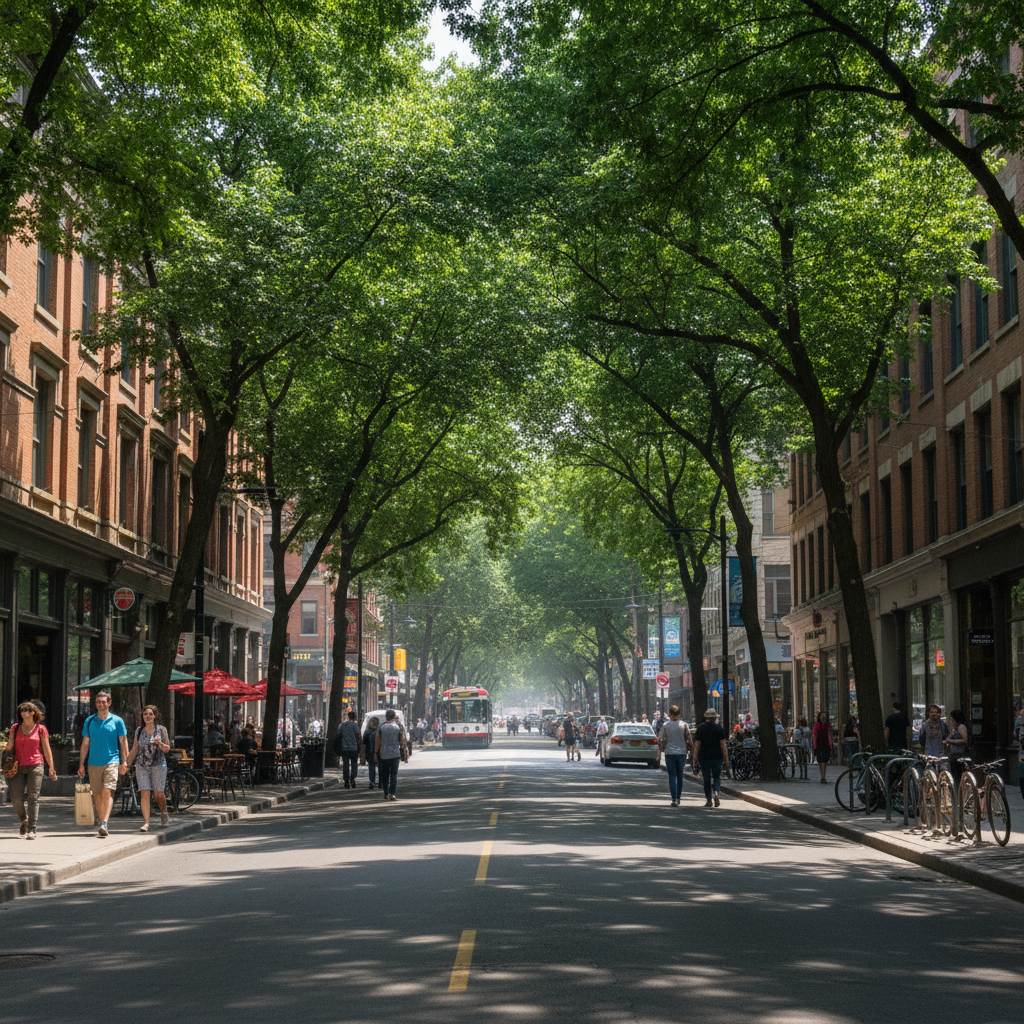
Flooding, extreme heat, poor air quality, and disappearing tree canopy are usually treated as separate problems. Municipalities assign them to different departments. Residents worry about them at different times of year. But these four issues are deeply interconnected, and understanding the links between them can help Ontario communities find solutions that address multiple problems at once.
The Cycle of Hard Surfaces
At the centre of this web of connections is one physical reality: the proportion of hard, impervious surface in a neighbourhood. Asphalt roads, concrete sidewalks, rooftops, and paved driveways do three things simultaneously. They prevent rainwater from soaking into the ground, contributing to flooding. They absorb and re-radiate solar heat, driving up temperatures. And they replace the vegetation that would otherwise filter air pollutants and provide cooling through evapotranspiration.
When a neighbourhood loses trees and green space to development, it does not just lose shade. It gains heat, loses stormwater capacity, and removes a natural air filtration system all at once. The reverse is also true. Restoring tree canopy and green infrastructure delivers benefits across all four dimensions.
Flooding and Stormwater
Ontario's rainfall patterns are intensifying. Short, heavy downpours that overwhelm drainage systems are becoming more common across the province. When rain falls on hard surfaces, it runs off immediately, concentrating in low-lying areas and flooding basements, streets, and underpasses.
Trees and vegetation reduce this problem in several ways. Tree canopies intercept rainfall, holding water on leaves and branches and releasing it slowly through evaporation. Root systems create channels in the soil that allow water to infiltrate rather than run off. A single mature tree can absorb thousands of litres of stormwater per year.
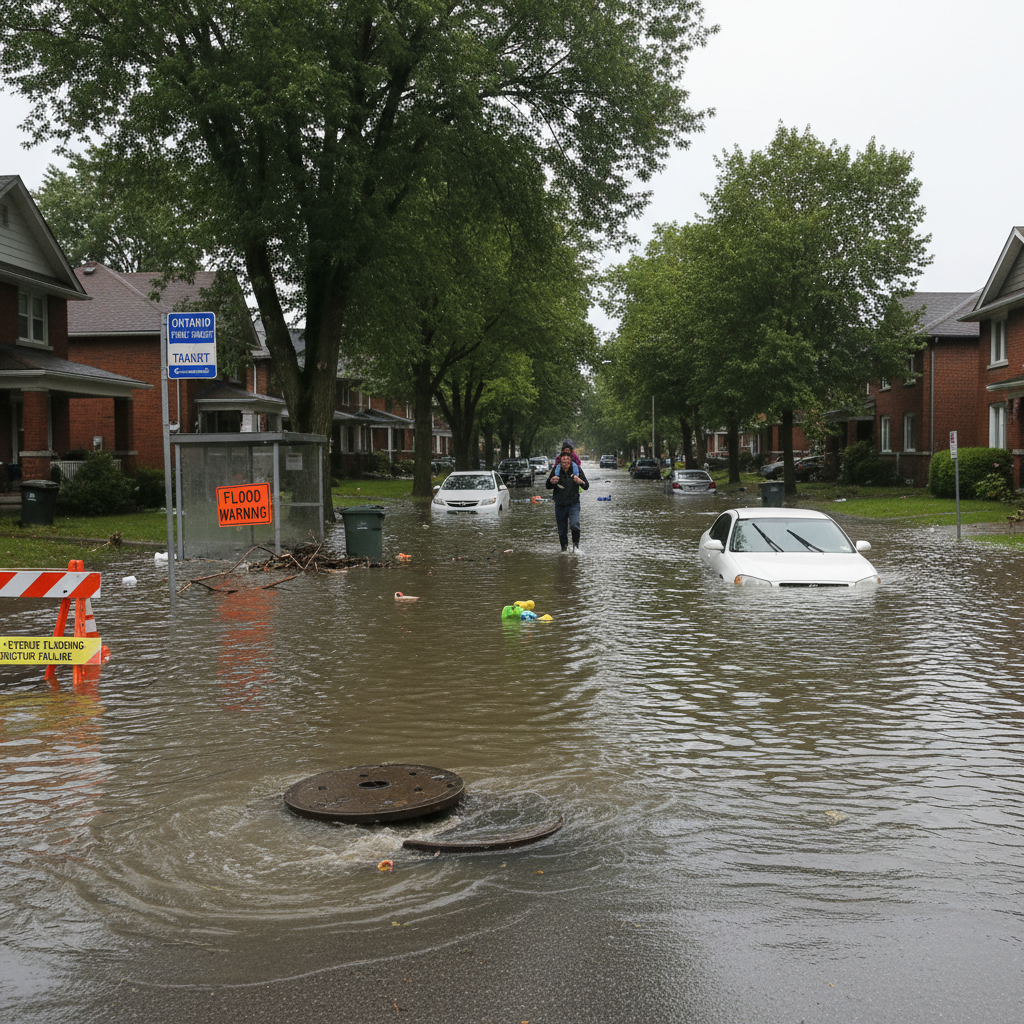
Green infrastructure like bioswales, rain gardens, and permeable surfaces works on the same principle. These features are most effective when combined with healthy tree canopy, because the trees provide the long-term soil structure and water uptake capacity that engineered features alone cannot replicate. For a deeper look at how stormwater design affects neighbourhood health, that connection is worth exploring.
Heat Islands in Ontario
The urban heat island effect is well documented in Ontario's larger cities, but it also affects smaller towns and suburbs. Any area with extensive hard surfaces and limited tree cover will be measurably hotter than surrounding areas with more vegetation. Temperature differences of 5 to 10 degrees Celsius between a tree-lined residential street and a nearby commercial parking lot are common during summer afternoons.
Excessive heat is a serious public health risk. Heat-related illness, cardiovascular stress, and worsening of respiratory conditions all increase during heat events. Ontario's public health units issue heat warnings with increasing frequency, and the populations most vulnerable to heat, including seniors, young children, and people with chronic illness, are often concentrated in the neighbourhoods with the least tree cover.
The connection to flooding is direct. Hard surfaces that cause flooding in rainstorms are the same surfaces that drive heat accumulation on sunny days. A parking lot that floods in July is an urban heat island in August. Addressing one problem with green solutions automatically helps with the other.
Air Quality and Tree Canopy
Trees improve air quality through several mechanisms. Leaves capture particulate matter, including the fine particles (PM2.5) that penetrate deep into the lungs and cause the most serious health effects. Trees absorb gaseous pollutants like nitrogen dioxide and ozone. They also reduce air temperatures, which slows the chemical reactions that create ground-level ozone on hot days.
This means that neighbourhoods with robust tree canopy tend to have better air quality than those without, even when they are in the same general area. The effect is especially significant near roads. A row of mature trees between a busy street and adjacent homes can meaningfully reduce the concentration of vehicle emissions that reach those homes.
Ontario's air quality challenges are not limited to the Greater Toronto Area. Many smaller cities and towns experience elevated ozone and particulate levels during summer, particularly when hot, stagnant weather settles over the region. Trees matter more than many residents realize in mitigating these episodes at the neighbourhood level.
The Compounding Effect
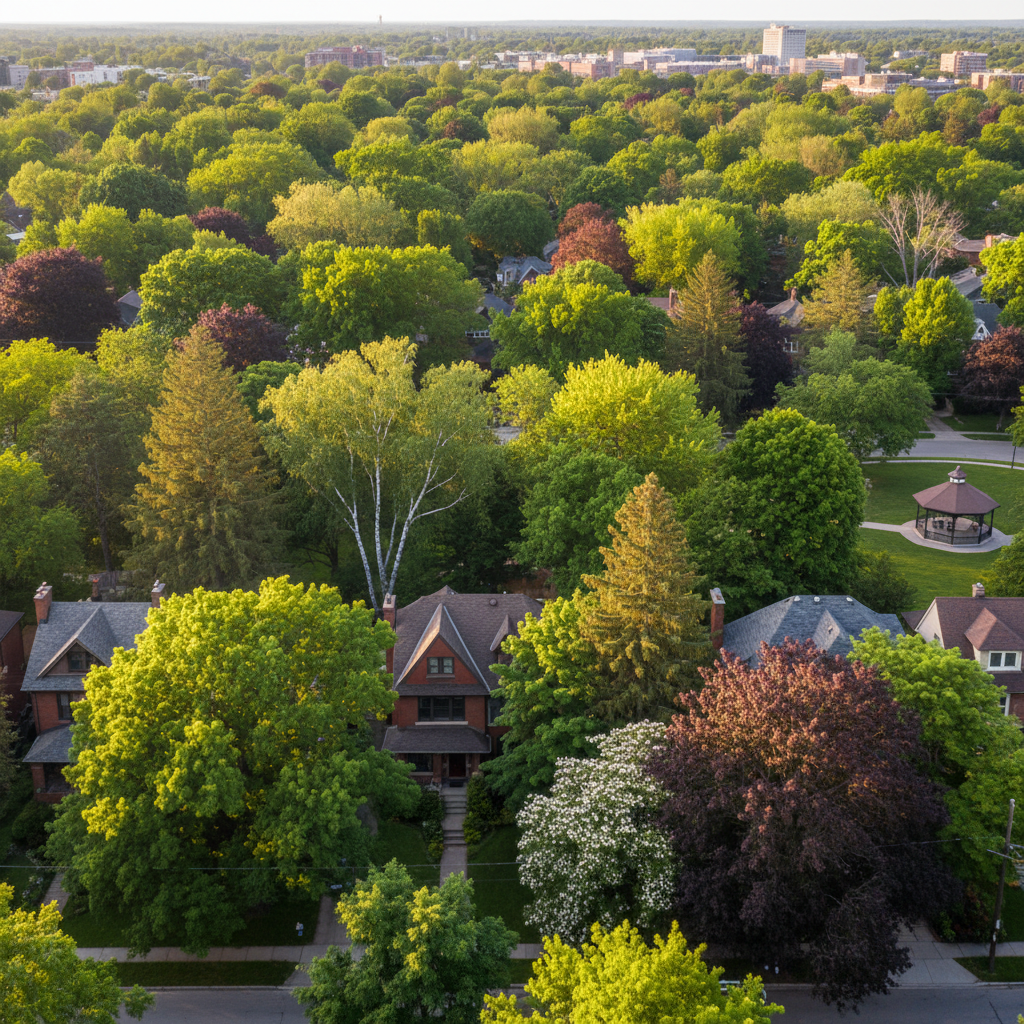
These four issues do not just coexist. They amplify each other. A neighbourhood that loses tree canopy becomes hotter. Higher temperatures increase ozone formation, worsening air quality. Hard surfaces that replaced the trees generate more stormwater runoff, increasing flood risk. Flooding events damage property and strain municipal budgets, leaving fewer resources for tree planting and green infrastructure. The cycle reinforces itself.
Conversely, investments in one area pay dividends across all the others. Planting trees reduces heat, improves air quality, absorbs stormwater, and enhances the streetscape. Installing green infrastructure manages flooding while also cooling the air and creating habitat. Protecting existing natural areas preserves all of these functions at once.
This is why the most effective municipal strategies treat these issues as components of a single system rather than isolated line items. Communities that understand the connections can stretch their infrastructure budgets further and deliver better outcomes for residents.
What Ontario Municipalities Are Doing
Several Ontario municipalities have adopted integrated approaches. The City of Toronto's Ravine Strategy, for example, recognizes that the city's ravine system simultaneously manages stormwater, cools the urban environment, filters air, and provides recreational green space. Protecting and restoring ravines addresses multiple challenges through a single management framework.
Smaller communities are finding their own paths. Some have adopted tree canopy targets in their official plans. Others have updated their stormwater management standards to require green infrastructure in new developments. A few have created dedicated urban forestry positions to manage tree planting and maintenance strategically rather than reactively.
The Green Infrastructure Ontario Coalition advocates for policies that recognize the interconnected benefits of natural systems and provides resources for municipalities looking to strengthen their approaches.
What Residents Can Do
Individual actions contribute to the larger picture. Planting and maintaining trees on your property, especially along the street frontage, adds to the neighbourhood canopy. Reducing paved surfaces by converting unused driveway space to planted areas or permeable materials addresses both heat and flooding. Supporting municipal tree planting programs and attending public meetings about development proposals that would remove significant canopy all help shift the balance.
When evaluating a neighbourhood's environmental quality, look for the signs that these systems are working together. Mature trees, visible green infrastructure, limited surface parking, and well-maintained public green spaces are all indicators that a community has invested in the interconnected health of its environment.
Understanding the links between flooding, heat, trees, and air quality is the first step toward more effective advocacy and better personal decisions about where and how to live in Ontario. These are not four separate problems. They are one challenge with a common set of solutions, and communities that recognize this will be better prepared for the decades ahead.