Parks and Trails as Everyday Infrastructure
Healthy Landscapes Ontario | November 15, 2025
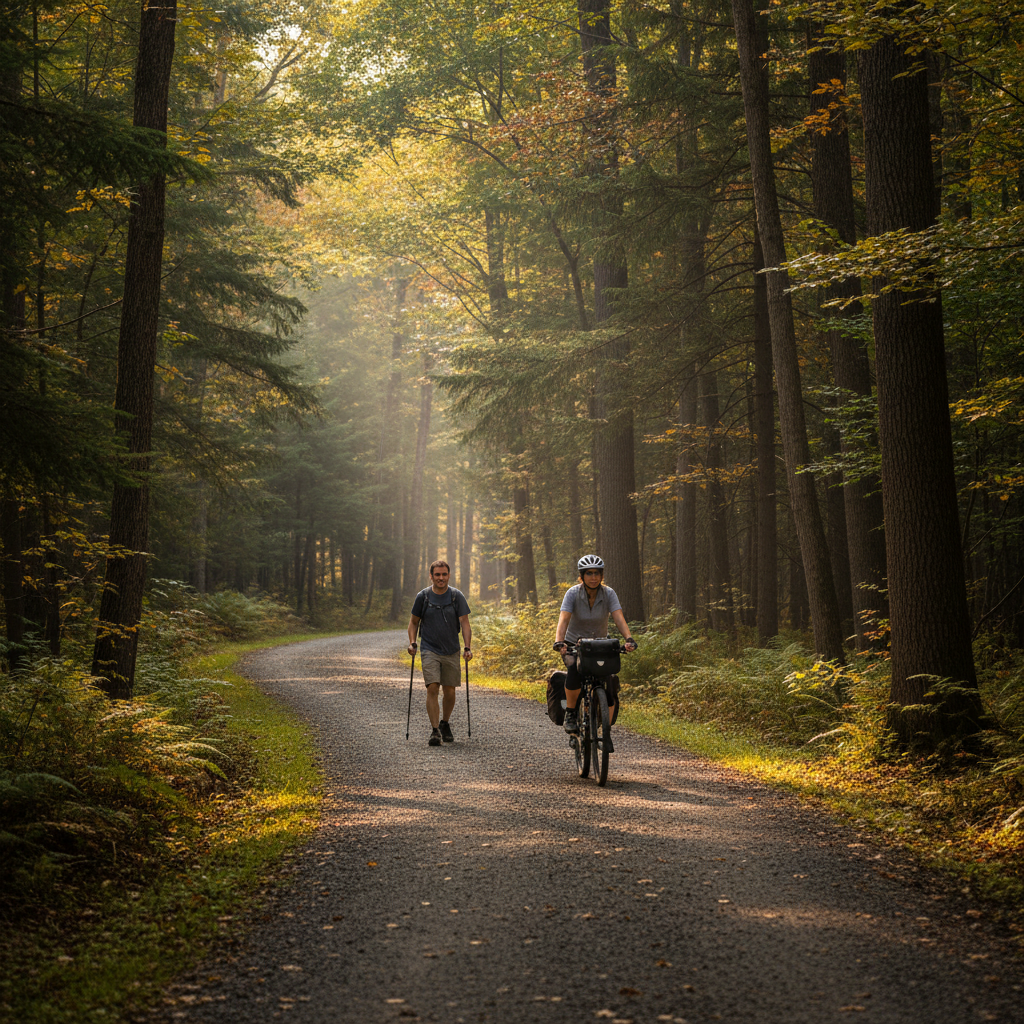
When municipalities plan for growth, the conversation usually begins with roads, water mains, sewers, and transit. Parks and trails, if they appear at all, tend to arrive later in the planning process, treated as amenities rather than essentials. But the communities across Ontario that function best, where people walk more, know their neighbours, and feel genuinely attached to where they live, tend to be places that treat parks and trails as core infrastructure.
This is not a sentimental argument. Parks and trails perform measurable infrastructure functions: they move people, manage water, reduce heat, support public health, and generate economic activity. Understanding them this way changes how communities plan, budget, and advocate for outdoor spaces.
How Do Parks Function as Infrastructure?
Infrastructure, at its most basic, is the set of systems that allow a community to function. Roads move vehicles. Sewers carry wastewater. Power lines deliver electricity. Parks and trails serve similarly essential roles, though their contributions are sometimes less visible.
First, parks manage stormwater. A well-designed park with permeable surfaces, natural drainage channels, and planted areas absorbs rainfall that would otherwise flow into storm sewers and contribute to flooding. In Ontario, where intense rainstorms are becoming more frequent, parks that double as stormwater management facilities save municipalities significant infrastructure costs. The Region of Waterloo has explicitly integrated parks into its stormwater management strategy, recognizing that natural landscapes handle water more effectively and affordably than engineered systems alone.
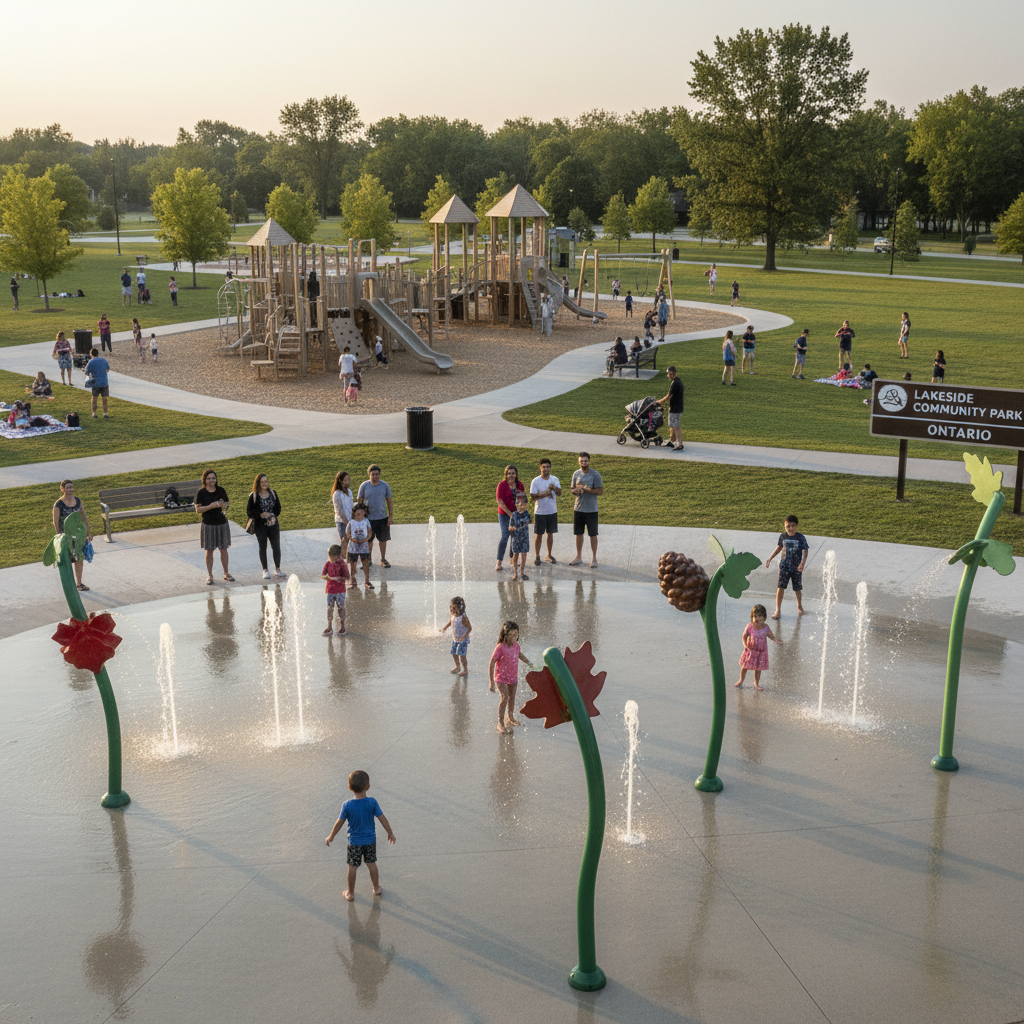
Community parks serve as gathering places where social connections form naturally across age groups and backgrounds.
Second, trails function as transportation corridors. Multi-use trails in Ontario's cities and towns carry thousands of commuters, students, and errand-runners daily. The Iron Horse Trail in Kitchener-Waterloo, for example, is as much a transportation route as any city street, connecting neighbourhoods to downtown, employment areas, and transit stations. When trails are well-connected and properly maintained, they offer a safe, pleasant alternative to driving that reduces traffic congestion and emissions.
Third, parks serve as social infrastructure. They are among the few remaining public spaces where people of all ages, incomes, and backgrounds gather without a transaction. The playground, the picnic shelter, the walking loop, and the community garden all facilitate the informal social contact that builds trust and strengthens community bonds. During the pandemic, the essential role of parks as social infrastructure became impossible to ignore, as Ontarians relied on outdoor spaces for the exercise, connection, and normalcy that indoor facilities could no longer provide.
What Is the Economic Case for Parks and Trails?
The economic benefits of parks and trails are well documented and increasingly difficult to dismiss. Property values near well-maintained parks are consistently higher, with studies showing premiums of 5 to 20 percent for homes within walking distance of quality green space. In Ontario's competitive housing market, park proximity is a significant factor in buyer decisions.
Trails generate direct economic activity as well. The Great Lakes Waterfront Trail, which stretches over 3,600 kilometres along Ontario's shoreline, generates an estimated $660 million in annual economic activity through tourism, accommodation, dining, and retail spending. Local trail networks in communities like Collingwood, Prince Edward County, and the Ottawa Valley support recreation tourism that sustains small businesses and creates seasonal employment.
There are cost avoidance benefits too. Every dollar spent on parks and active recreation saves several dollars in health care costs by reducing the burden of chronic diseases linked to sedentary lifestyles. A 2019 report from Parks and Recreation Ontario estimated that the province's parks and recreation sector prevents billions of dollars in annual health care costs through physical activity promotion alone.
How Do Parks Support Local Businesses?
Parks and trails create foot traffic, and foot traffic supports local commerce. A downtown park that draws lunchtime visitors brings customers to nearby cafes and shops. A trail that passes through a commercial district exposes cyclists and walkers to businesses they might never visit by car. In small Ontario towns, a well-designed waterfront park or main street green space can be the anchor that keeps a downtown economically viable.
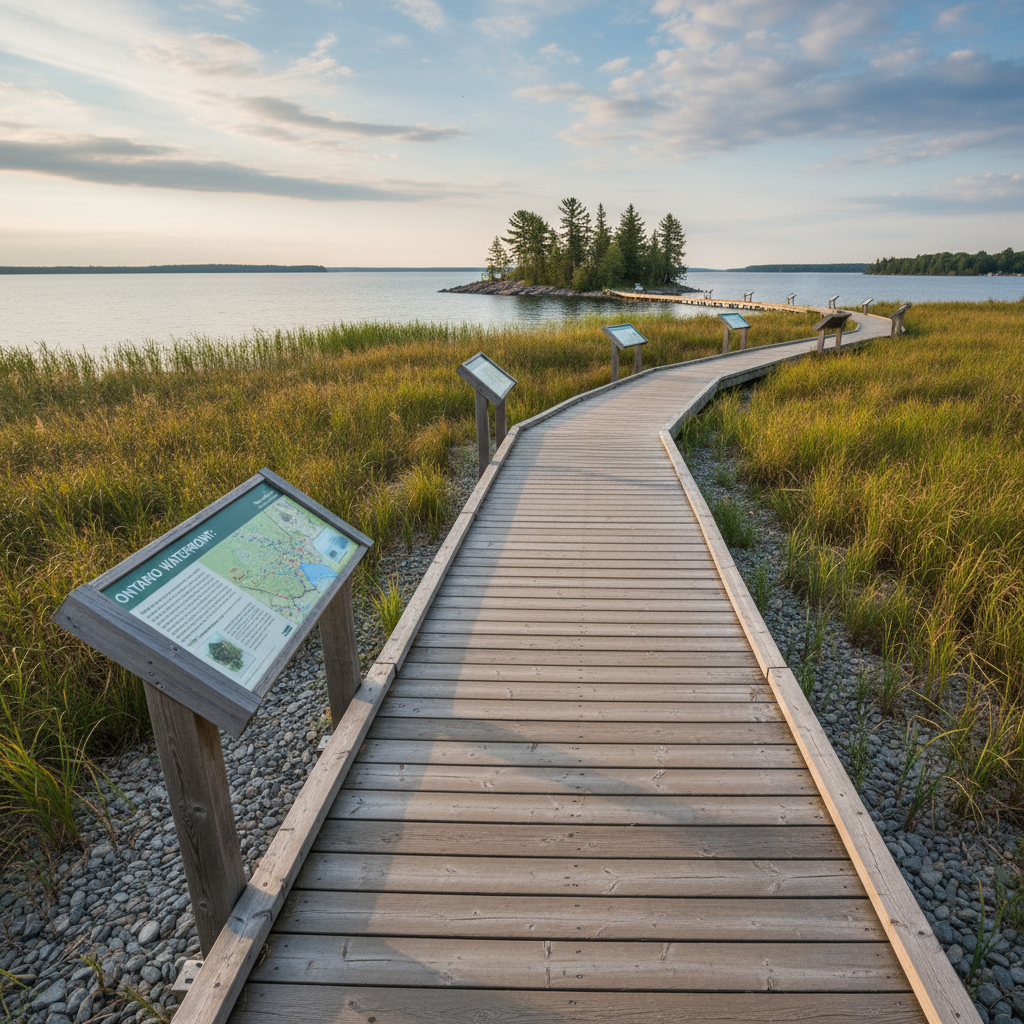
Boardwalk trails provide accessible routes through sensitive natural areas while attracting visitors who support local economies.
Guelph's riverside trail system, for instance, brings steady foot traffic past the city's downtown businesses. Cobourg's waterfront park draws visitors from across the GTA who spend at local restaurants and shops. These are not incidental benefits. They are predictable outcomes of investing in outdoor spaces that people want to visit and return to.
Why Is Maintenance as Important as Construction?
Building a park or trail is only the beginning. Without sustained maintenance, outdoor infrastructure degrades quickly. Cracked pavement, overgrown vegetation, broken lighting, and damaged amenities signal neglect and discourage use. Communities that invest heavily in construction but underfund maintenance often end up with parks that fail to deliver the benefits they were designed to provide.
Ontario municipalities face ongoing budget pressures, and parks maintenance is sometimes among the first line items to be reduced. This short-term thinking undermines long-term returns. A well-maintained park attracts steady use, which builds political support for continued investment. A neglected park loses users, which makes it easier to justify further cuts. Breaking this cycle requires treating parks maintenance as essential infrastructure spending, not a discretionary amenity.
Community involvement can supplement municipal maintenance. Volunteer groups that adopt parks, organize clean-ups, and report maintenance issues help keep outdoor spaces in good condition. Programs like Adopt-a-Park in Toronto and trail stewardship programs across the province demonstrate how resident engagement extends the reach of limited municipal budgets.
How Can Ontario Communities Think Differently About Parks?
Treating parks and trails as infrastructure means including them in capital planning from the start, not as an afterthought. It means allocating maintenance budgets that reflect the actual cost of keeping outdoor spaces functional and attractive. It means measuring the performance of parks in the same way communities measure the performance of roads and water systems, through usage data, condition assessments, and benefit-cost analysis.
It also means connecting parks to the broader ecological systems they are part of. A park that incorporates native plantings, protects a stream corridor, and provides wildlife habitat delivers more value than a manicured lawn surrounded by pavement. Ecological design and infrastructure function reinforce each other.
Ontario's growing communities have an opportunity to get this right. Every new subdivision, every intensification project, and every downtown revitalization is a chance to integrate parks and trails as essential infrastructure that serves residents for generations. The communities that seize this opportunity will be healthier, more connected, and more resilient than those that treat outdoor spaces as optional.
Frequently Asked Questions
Why should parks and trails be considered infrastructure?
Parks and trails serve essential community functions including transportation, stormwater management, public health promotion, social gathering, and climate adaptation. They deserve the same long-term planning, maintenance budgets, and strategic investment as roads, sewers, and transit systems.
How do parks support active transportation in Ontario?
Multi-use trails in parks provide safe, separated routes for walking and cycling that connect neighbourhoods to schools, workplaces, and commercial areas. Many Ontario trail networks serve as active transportation corridors that reduce car dependence and traffic congestion.
What is the economic value of parks and trails in Ontario?
Ontario parks and trails generate significant economic returns through increased property values, tourism spending, reduced health care costs, and stormwater management. The Great Lakes Waterfront Trail alone generates an estimated $660 million in annual economic activity.
How can communities advocate for better park and trail infrastructure?
Residents can attend municipal budget meetings, join parks advisory committees, participate in official plan reviews, support local trail organizations, and use data on park usage and health benefits to make the case for sustained investment.