Community Orchards as Shared Green Space
Healthy Landscapes Ontario | January 5, 2026
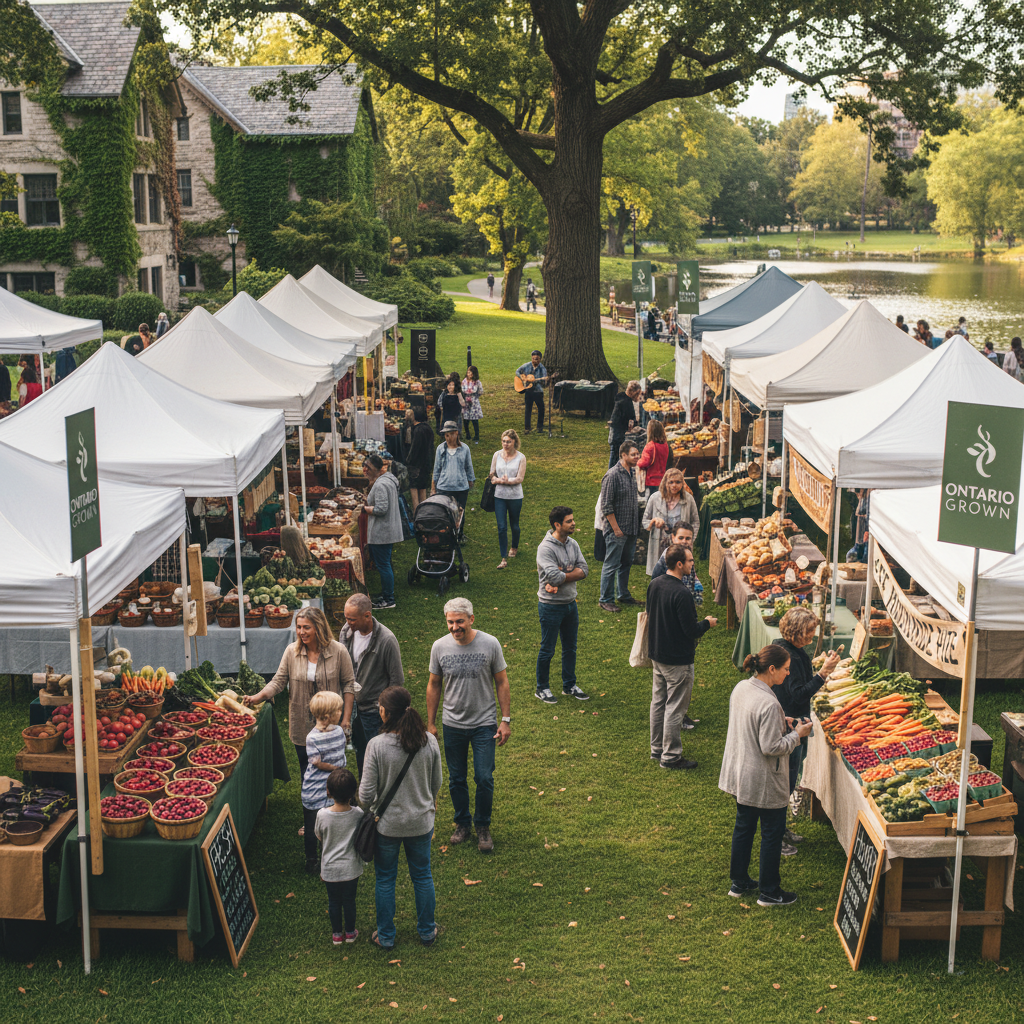
Community orchards serve as gathering places where food production and neighbourhood social life overlap naturally.
Between a retired elementary school and a row of postwar bungalows in Guelph's west end, there is a small orchard. It has about 40 fruit trees, mostly apple and pear varieties chosen for their hardiness in Ontario's climate. The grass underneath is not mowed to suburban standards. Wildflowers grow around the bases of the trees. There are a few benches, a hand-painted sign, and a wooden shed where tools are stored.
On a Saturday morning in September, the orchard is full of people. Neighbours pick fruit. Children climb the lower branches. Someone has set up a folding table with a cider press, and there is a lineup. Two women who live on opposite sides of the orchard, who might never have met otherwise, are sharing a conversation about preserving techniques they learned from their mothers.
This is what a community orchard does. It produces fruit, yes. But more importantly, it produces a reason for people to gather, to contribute, to share, and to feel invested in a piece of common ground. Across Ontario, community orchards are emerging as a distinctive form of shared green space that combines food production, ecological benefit, and social infrastructure in a way that conventional parks do not.
How Community Orchards Differ from Community Gardens
Ontario has hundreds of community gardens, and they serve an important purpose. But community orchards operate on a different model. A community garden is typically divided into individual plots assigned to specific gardeners. It produces food, but the social structure is based on parallel individual effort rather than collective management of shared resources.
A community orchard belongs to everyone. The fruit is not assigned to specific households. Maintenance is shared among volunteers. The harvest is communal, often distributed informally or at organized picking events. This shared ownership model creates different social dynamics. People contribute labour to something that benefits the whole group, and they receive the benefit of everyone else's contributions. It is a small, tangible experience of the commons.
The fruit trees themselves have different characteristics than annual vegetable gardens. They take years to establish, which builds long-term commitment from participants. They provide shade, habitat, and seasonal beauty that goes beyond food production. And they produce abundantly once mature, often far more than the immediate community can consume, which creates opportunities for sharing, donation, and community food distribution.
The Ben Chicken Community Orchard, Guelph
The Ben Chicken Community Orchard, named after a long-time neighbourhood resident, was established in 2015 on a half-acre parcel of city-owned land that had been sitting vacant for years. The project was initiated by a group of neighbours who approached the city with a proposal to plant and maintain a fruit orchard as a community resource.
The city's response was cautiously supportive. The land was made available under a licence agreement that gives the community group responsibility for maintenance while the city retains ownership. The city provided initial site preparation, including soil testing and grading, while the community group raised funds for trees, fencing, and tools through a mix of small grants, donations, and a crowdfunding campaign.
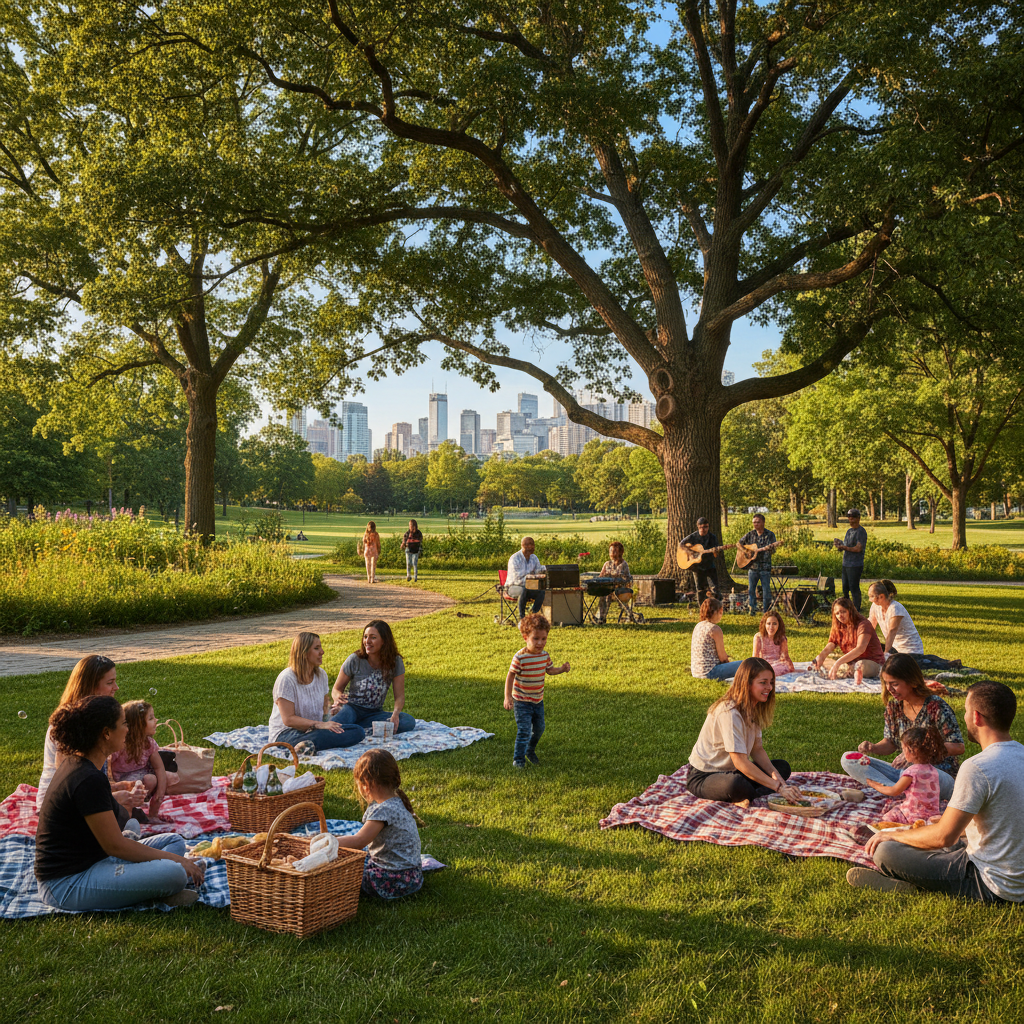
Volunteer workdays at community orchards build the social bonds that keep the project functioning year after year.
The first planting included 35 fruit trees: heritage apple varieties like Snow, Tolman Sweet, and Wealthy that are well-adapted to Ontario conditions, along with several pear, plum, and cherry trees. Subsequent plantings added berry bushes, a small nut grove, and pollinator habitat around the orchard perimeter. The design was intentional about creating a space that worked for gathering as well as growing, with open areas between tree rows, informal seating, and a central clearing where events could be held.
Seven years later, the orchard is producing several hundred kilograms of fruit annually. The harvest is open to anyone, though regular volunteers tend to be the most active harvesters. Surplus fruit is donated to local food banks through a partnership with a Guelph-based gleaning organization. The orchard hosts seasonal events including a spring blossom walk, a summer pruning workshop, and an autumn harvest festival that draws several hundred people from across the city.
Kingston's Orchard Network
Kingston has taken the community orchard concept further than most Ontario cities by supporting a network of small orchards distributed across multiple neighbourhoods, drawing on models promoted by organizations like Community Food Centres Canada. Rather than a single large orchard, Kingston's model establishes clusters of 10 to 20 fruit trees in parks, schoolyards, and other public spaces, each maintained by a local volunteer group with coordination support from the city's food policy council.
The distributed model has several advantages. Each orchard is close to the people who use it, reducing the travel barrier that limits participation in centralized community food projects. The smaller scale makes each orchard more manageable for volunteer maintenance. And the geographic distribution means that different neighbourhoods, including lower-income areas where access to fresh fruit is limited, benefit from the program.
Kingston's orchards use a standardized planting plan developed by a local horticulturist with expertise in Ontario fruit varieties. The plan specifies disease-resistant cultivars that require minimal spraying, rootstocks selected for the local soil conditions, and spacing that allows the trees to be productive while leaving room for gathering and other park activities. This standardization makes it easier for volunteer groups to maintain the orchards consistently, since the care requirements are well-documented and similar across all sites.
Ecological Benefits Beyond Food
Community orchards provide ecological services that go well beyond fruit production. Fruit trees in bloom are important early-season food sources for native pollinators, providing nectar and pollen at a time when few other sources are available. The varied structure of an orchard, with canopy, understory, and ground-level vegetation, creates habitat niches for birds, insects, and small mammals that are absent from mowed parkland.
When orchards incorporate companion plantings like wildflower meadows, berry bushes, and native ground covers, their ecological value increases substantially. The Ben Chicken Orchard in Guelph recorded over 40 species of native bees using the orchard during a single season survey, a level of pollinator diversity that far exceeds what is found in adjacent mowed parkland.
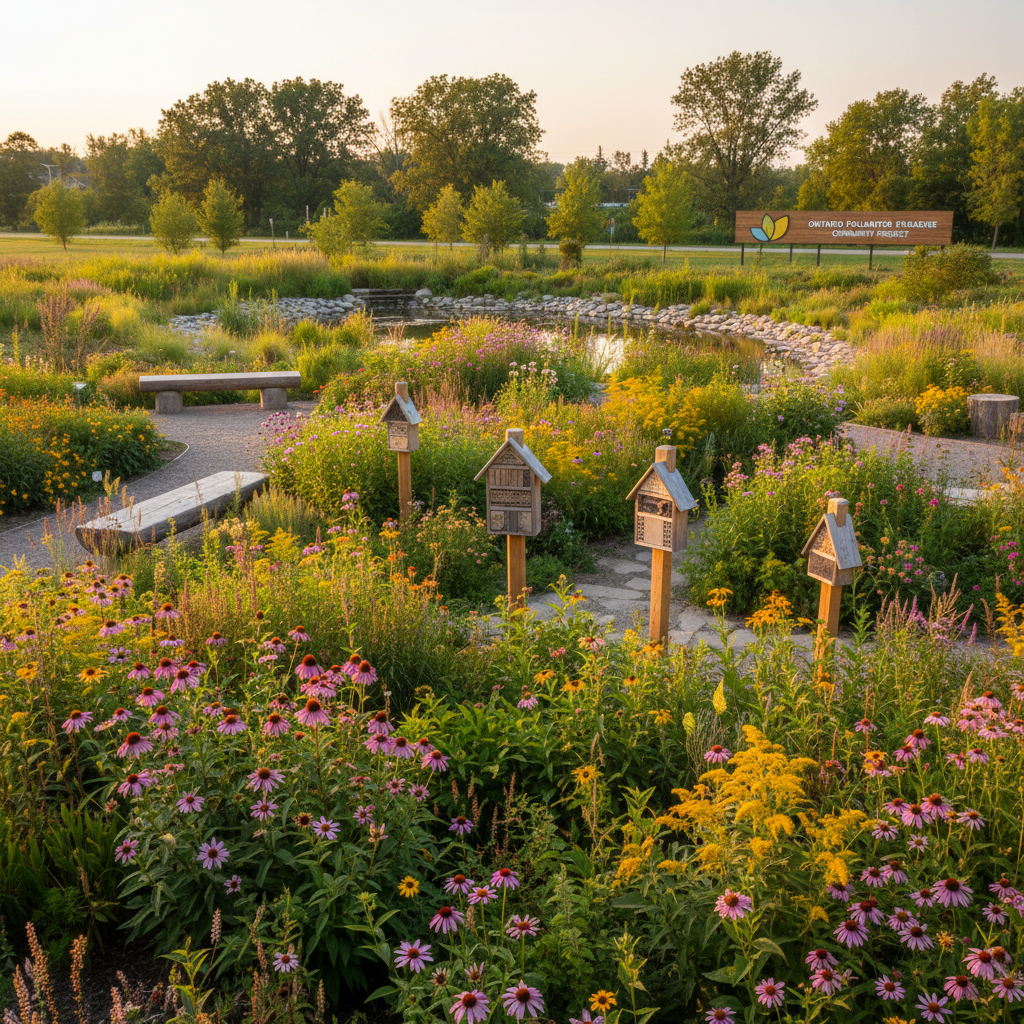
Fruit tree blossoms provide critical early-season food for native pollinators emerging from winter dormancy.
The soil health in community orchards also tends to be significantly better than in conventional parks. The leaf litter, mulch, and compost that accumulate under fruit trees build soil organic matter, improve water infiltration, and support a diverse community of soil organisms. Over time, the soil under an orchard becomes a productive, living system that contrasts sharply with the compacted, low-organic-matter soil under regularly mowed turf.
Challenges of the Model
Community orchards face real challenges that should be acknowledged honestly. Volunteer fatigue is the most common. The enthusiasm of the founding group often carries a project through the first few years, but sustained maintenance over decades requires ongoing recruitment of new volunteers. Some Ontario orchards have struggled after key organizers moved away or lost capacity, leading to periods of neglect that set the trees back.
Fruit tree management in Ontario's climate is not trivial. Apple scab, fire blight, coddling moth, and other pests and diseases require knowledge and timely action. Pruning must be done correctly and at the right time. Deer browsing can damage young trees, particularly in communities near the urban-rural edge. These are manageable challenges, but they require more expertise and attention than maintaining a standard park.
The land tenure question is also important. Most community orchards in Ontario operate on municipal land under temporary licence agreements. These agreements can be revoked if the municipality decides to use the land for another purpose. Trees planted with a 50-year productive lifespan need a more secure tenure arrangement than a five-year renewable licence. Some municipalities are beginning to designate orchard lands in their official plans, which provides stronger protection, but this is not yet standard practice.
Lessons for Ontario Communities
The community orchards that thrive in Ontario share several characteristics. They have a core group of committed volunteers, but they also create low-barrier entry points for new participants through seasonal events, work parties, and partnerships with schools. They choose fruit varieties suited to Ontario conditions rather than chasing exotic or high-maintenance species. They plan for succession, both in terms of volunteer leadership and tree replacement, recognizing that an orchard is a multi-decade project.
They also think about the orchard as a social space, not just a food production space. The orchards that attract the broadest participation are the ones that host events, provide comfortable gathering areas, and welcome people who come to sit under the trees without necessarily picking fruit. A community orchard that only serves dedicated gardeners is a community garden with trees. An orchard that serves the whole neighbourhood, producing social connections alongside fruit, is something genuinely different.
Ontario has excellent conditions for community fruit growing. Hardy heritage varieties, a supportive conservation authority network, growing municipal interest in food policy, and abundant public land that could be put to better use than mowed grass. The model works. It just needs more communities willing to plant the first trees and commit to tending them.