Waterfront Parks and Small-Town Renewal
Healthy Landscapes Ontario | February 5, 2026
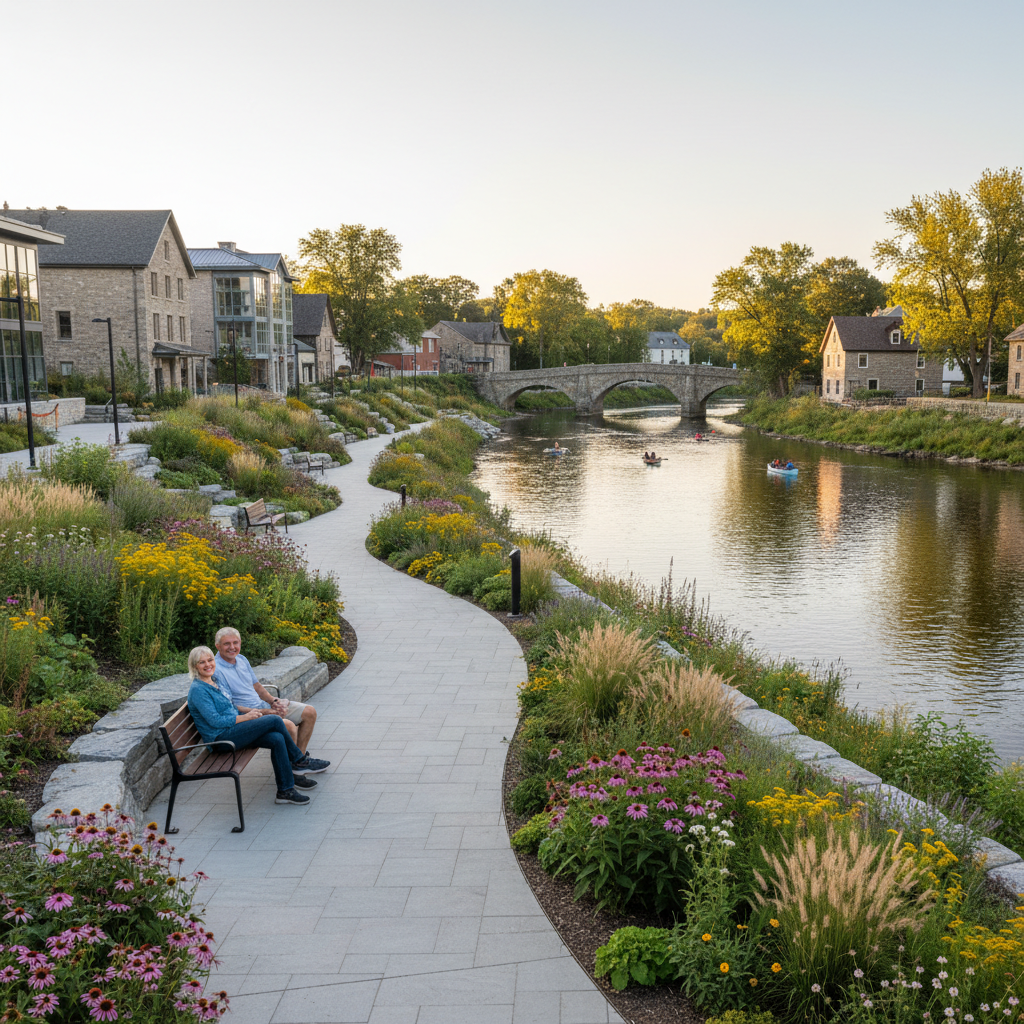
Waterfront park investments give small Ontario towns a gathering place, a destination, and a reason for visitors to stop and stay.
Drive through the small towns of eastern and central Ontario and you will notice a pattern. Many of them sit on water. Lakes, rivers, canals, and bays define their geography and their history. These waterways brought the mills that built the towns, the ships that connected them to the wider world, and the tourists who sustained them through the 20th century.
But by the late 1990s and early 2000s, many of these waterfront towns were struggling. Big-box stores on the highway pulled shoppers away from downtown streets. Young people left for cities. Main street storefronts sat vacant. The waterfront itself, once the centre of town life, had in many cases been given over to parking lots, decaying industrial sites, or simply neglected stretches of weedy shoreline behind buildings that turned their backs to the water.
The towns that have reversed this decline share a common thread: they invested in their waterfronts. Not with massive condo developments or resort complexes, but with well-designed public parks that gave residents a reason to gather and visitors a reason to stop. The investment was modest by municipal capital standards, but the effects on community life and local economies have been substantial.
Port Hope: Rebuilding Around the Waterfront
Port Hope, on the north shore of Lake Ontario about 100 kilometres east of Toronto, has one of the best-preserved historic downtowns in Ontario. But for years, the connection between the downtown and the waterfront was broken. The Ganaraska River runs through the town centre to the lake, but the riverbanks were largely inaccessible and the lakefront park was underused and disconnected from the commercial streets.
Starting in the mid-2010s, Port Hope invested in a series of waterfront improvements that gradually rebuilt the connection between the town and the water. The centrepiece was a redesigned waterfront park with a promenade along the harbour, improved beach access, a bandshell for events, and seating areas with views of the lake. Trail connections were added along the Ganaraska River, linking the waterfront to the downtown core and to trail systems upstream.
The improvements did not happen all at once. They were phased over several years, with each phase building on the momentum of the last. Early phases focused on the most visible and immediately usable elements: pathways, seating, and basic amenities. Later phases added event infrastructure, public art, and enhanced landscaping. The phased approach kept costs manageable for a small municipality and allowed each investment to demonstrate its value before the next one was approved.
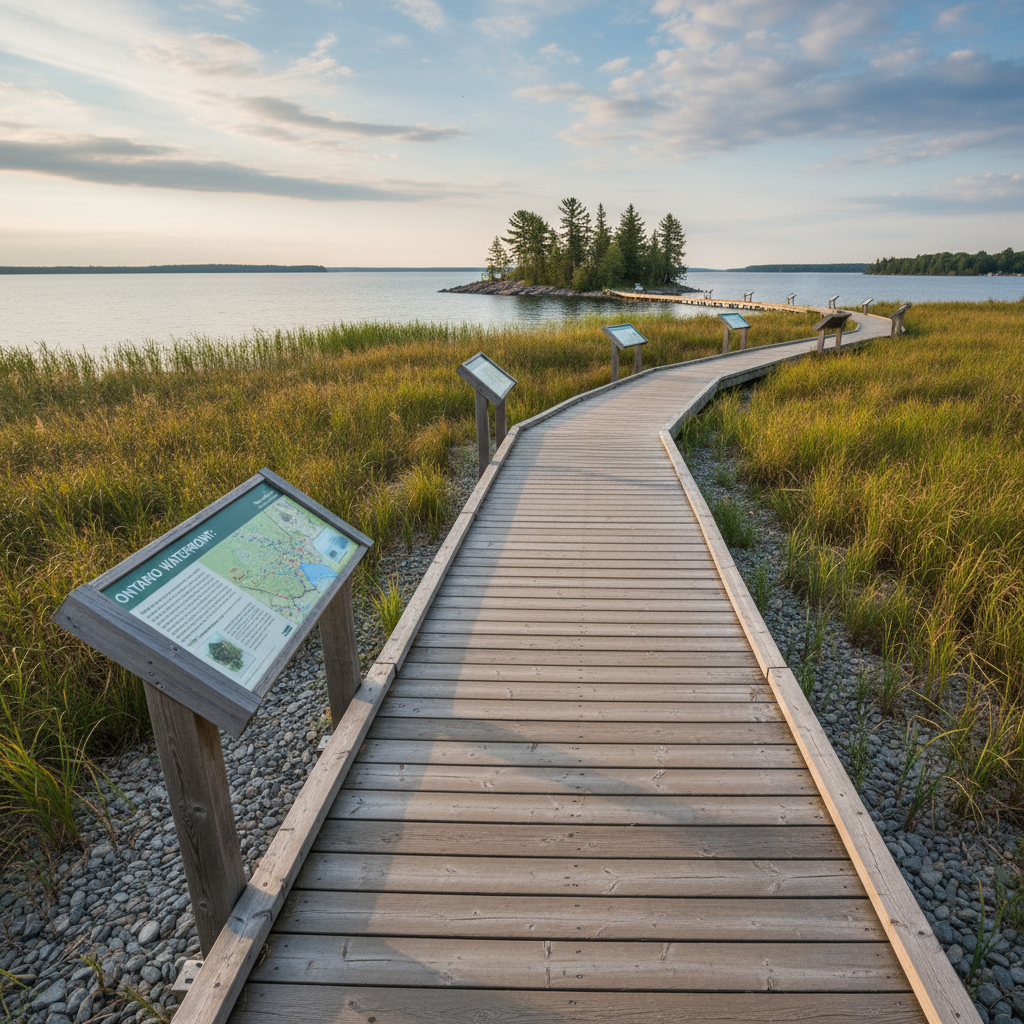
Boardwalk promenades along the waterfront create the kind of strolling, lingering spaces that draw both residents and visitors.
The results have been significant. Downtown vacancy rates dropped. New restaurants and shops opened in buildings that had been empty for years. The waterfront park became the site of regular community events, from farmers markets to concert series to an annual folk festival. Foot traffic between the waterfront and the downtown increased measurably, with businesses on the connecting streets reporting higher sales on days when waterfront events were held.
Cobourg's Beach and Beyond
Cobourg, just down the lakeshore from Port Hope, has long been known for its beach. Victoria Park Beach is one of the finest sand beaches on Lake Ontario, drawing visitors from across the Greater Toronto Area on summer weekends. But for years, the park surrounding the beach was underdesigned and the connection to the town centre was weak. Visitors came for the beach but rarely ventured into downtown Cobourg.
The town's waterfront master plan, developed through extensive community consultation, identified the need to create a waterfront experience that extended beyond the beach itself. Investments included an upgraded boardwalk, improved picnic and barbecue facilities, a splash pad for children, enhanced landscaping with native plantings, and better pedestrian connections between the waterfront and King Street, the main commercial corridor.
Critically, the plan also addressed the shoulder seasons. A beach park that only works for eight weekends in July and August has limited economic impact. By adding features that work in spring, fall, and even winter, including all-season trails, sheltered seating areas, and connected walking routes, Cobourg extended the useful season of its waterfront from two months to nine or ten. The waterfront now draws walkers, runners, and cyclists year-round, and the adjacent businesses have seen their seasonal dip become much less severe.
Gananoque and the Thousand Islands Gateway
Gananoque, a town of about 5,000 people at the gateway to the Thousand Islands on the St. Lawrence River, had long relied on summer tourism but struggled to convert that seasonal traffic into year-round economic stability. The waterfront was dominated by tour boat operations and parking, with limited public green space or gathering areas.
The town's waterfront renewal focused on creating a genuine public park at the water's edge, something that belonged to residents rather than just serving tourists. The redesigned waterfront includes a public plaza, a performance space, interpretive elements about the town's history and the river ecosystem, and a continuous waterfront walkway that connects the commercial waterfront to residential areas and the town's trail system.
The design deliberately balanced tourism function with community function. The tour boats still operate, but the waterfront is no longer just a launching point for excursions. It is a place where residents walk their dogs in the morning, where families eat dinner on summer evenings, and where the Saturday morning market draws a mix of locals and visitors. This dual function makes the waterfront economically productive while also serving as the town's primary public gathering space.
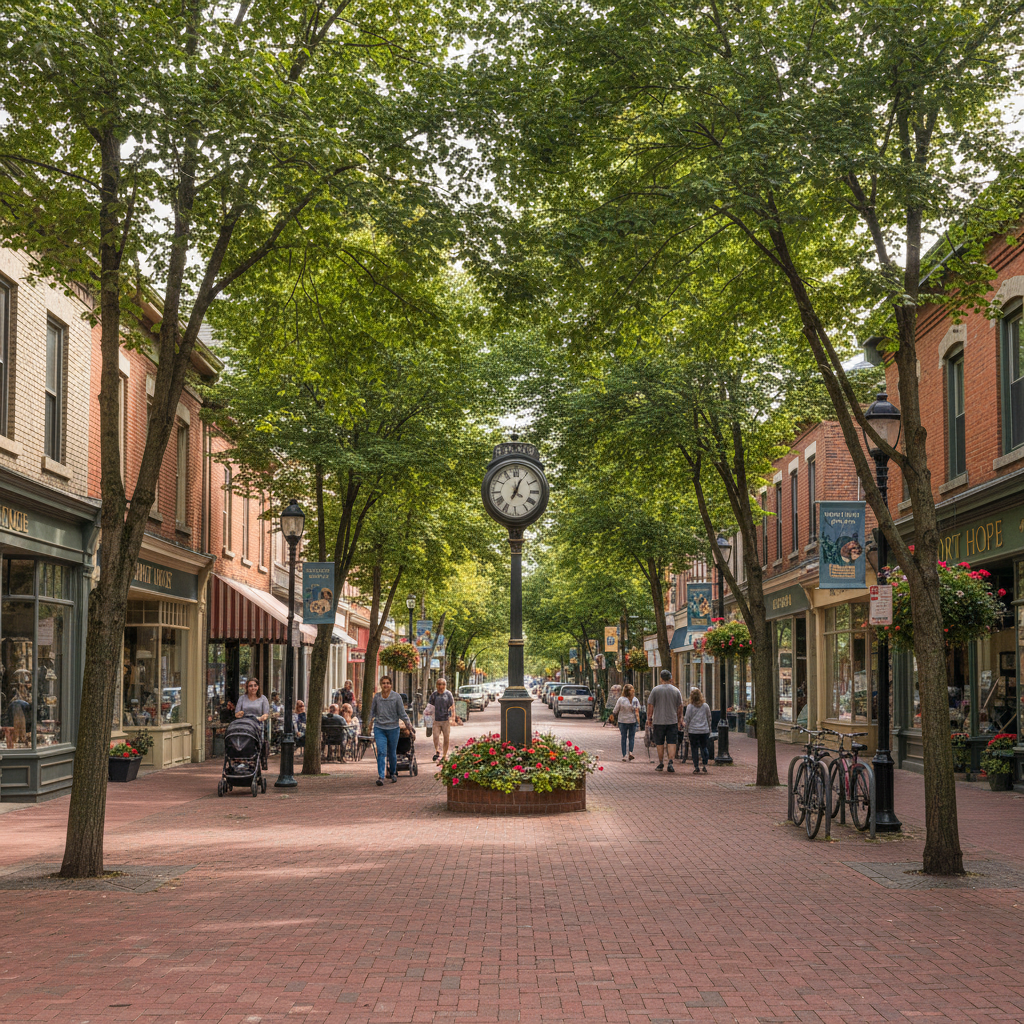
Strong pedestrian connections between waterfront parks and main streets allow both areas to benefit from each other's foot traffic.
What Makes Waterfront Park Investment Work
The small Ontario towns that have successfully used waterfront parks as catalysts for renewal share several practices. First, they plan the waterfront and the downtown together rather than as separate projects. The physical and economic connections between the waterfront and the commercial core are what make both elements work. A waterfront park that is disconnected from the town centre by a parking lot or a busy road delivers far less value than one that flows naturally into the main street.
Second, they design for year-round use. A waterfront park that works only in summer is an expensive amenity. One that works across all four seasons is an anchor for the community. This means all-weather surfaces, winter maintenance, lighting for shorter days, and features that provide interest and comfort in every season. In Ontario, where winter lasts five months, this consideration is essential.
Third, they invest in maintenance. A waterfront park that looks shabby after three years undermines the renewal narrative. The towns that have sustained their waterfront investments maintain them to a high standard, which reinforces the message that the waterfront matters and encourages private investment in surrounding properties. Maintenance budgets need to be committed alongside capital budgets, not treated as an afterthought.
The Economic Ripple Effect
The economic impact of waterfront park investment in small Ontario towns extends well beyond the park itself. Improved waterfronts attract visitors who spend money in downtown businesses. They encourage property owners to invest in building improvements and new businesses. They increase property values in surrounding areas, which strengthens the municipal tax base. And they improve quality of life for residents, which helps with talent attraction and retention in an era when remote work makes location choice more flexible than ever.
A study by the Ontario Trails Council found that trail and waterfront investments in small communities generate returns of $3 to $5 in economic activity for every dollar invested, through a combination of tourism spending, property value increases, and reduced infrastructure costs compared to conventional development approaches.
These returns are not immediate. It typically takes three to five years after a waterfront improvement for the full economic effects to manifest in surrounding business activity and property values. This lag means that municipalities need patience and sustained commitment to the renewal strategy, even when the first-year results are modest.
Lessons for Ontario's Small Towns
Ontario has hundreds of small towns on water. Many of them face the same challenges that Port Hope, Cobourg, and Gananoque have confronted: declining downtowns, seasonal economies, and waterfronts that are underused or disconnected from community life. The experiences of towns that have invested in their waterfronts offer a consistent set of lessons.
Start with the public space. Private investment follows public investment, not the other way around. A well-designed waterfront park creates the conditions for commercial revival by establishing the destination and the foot traffic that businesses need to thrive. Trying to attract private waterfront development without a public space framework usually produces results that serve investors rather than the community.
Connect the waterfront to the downtown. The two need each other. The waterfront provides the draw; the downtown provides the services and spending opportunities. Physical connections, through well-designed pedestrian routes, signage, and streetscape improvements, make the relationship work. Where the two are separated by barriers, removing or mitigating those barriers should be a priority.
Design for the community first and visitors second. A waterfront park that feels like it belongs to residents will also attract visitors, because authentic, well-used public spaces are inherently appealing. A waterfront designed primarily for tourism often feels hollow outside of peak season and fails to generate the year-round activity that sustains a healthy downtown.
Ontario's small waterfront towns have an asset that cannot be replicated: they sit on water, in beautiful settings, with historic character and human scale. The towns that recognize this asset and invest in making it publicly accessible are the ones finding their way forward.