
Healthy Community Checklist for Ontario Homebuyers

Buying a home is one of the largest financial decisions most Ontarians will make, and it is also one of the most consequential decisions for long-term health. The neighbourhood where you live determines the air you breathe, the water you drink, how much you walk, your exposure to noise and heat, and the quality of your daily environment. Yet most homebuyers focus almost entirely on the house itself while treating the surrounding community as an afterthought.
This checklist is designed to change that. Use it alongside your standard home inspection process to evaluate the environmental and health characteristics of any Ontario neighbourhood you are considering. Print it out, bring it to viewings, and take the time to research each section. The effort will pay off for years to come.
Air Quality
- Is the property more than 200 metres from a major highway or high-traffic arterial road? Closer distances are associated with elevated exposure to vehicle emissions.
- Are there industrial facilities, aggregate operations, or waste management sites within 1 kilometre? Check the Ontario Environmental Activity and Sector Registry.
- What does the nearest Air Quality Health Index (AQHI) monitoring station typically report? Look at summer readings when ozone levels peak.
- Is there substantial tree canopy between the property and nearby roads? Trees filter particulate matter and absorb gaseous pollutants.
- Visit the neighbourhood on a hot, still summer day if possible. Stagnant conditions reveal air quality issues that breezy days mask.
For detailed guidance, see our article on air quality near Ontario highways.
Water Quality and Supply
- Is the property on municipal water or a private well? Each has different implications and responsibilities.
- If municipal: review the most recent annual water quality report. Look for any exceedances, advisories, or boil-water orders in the past five years. Our drinking water guide explains what to look for.
- If private well: request recent bacteriological and chemical test results. Plan for an independent test before closing. Ask about the well's age, depth, and construction.
- Does the municipality use chloramine or chlorine for disinfection? Are there elevated levels of lead, trihalomethanes, or other disinfection byproducts?
- What is the hardness of the water? This affects plumbing, appliances, and personal comfort.
Flooding and Drainage
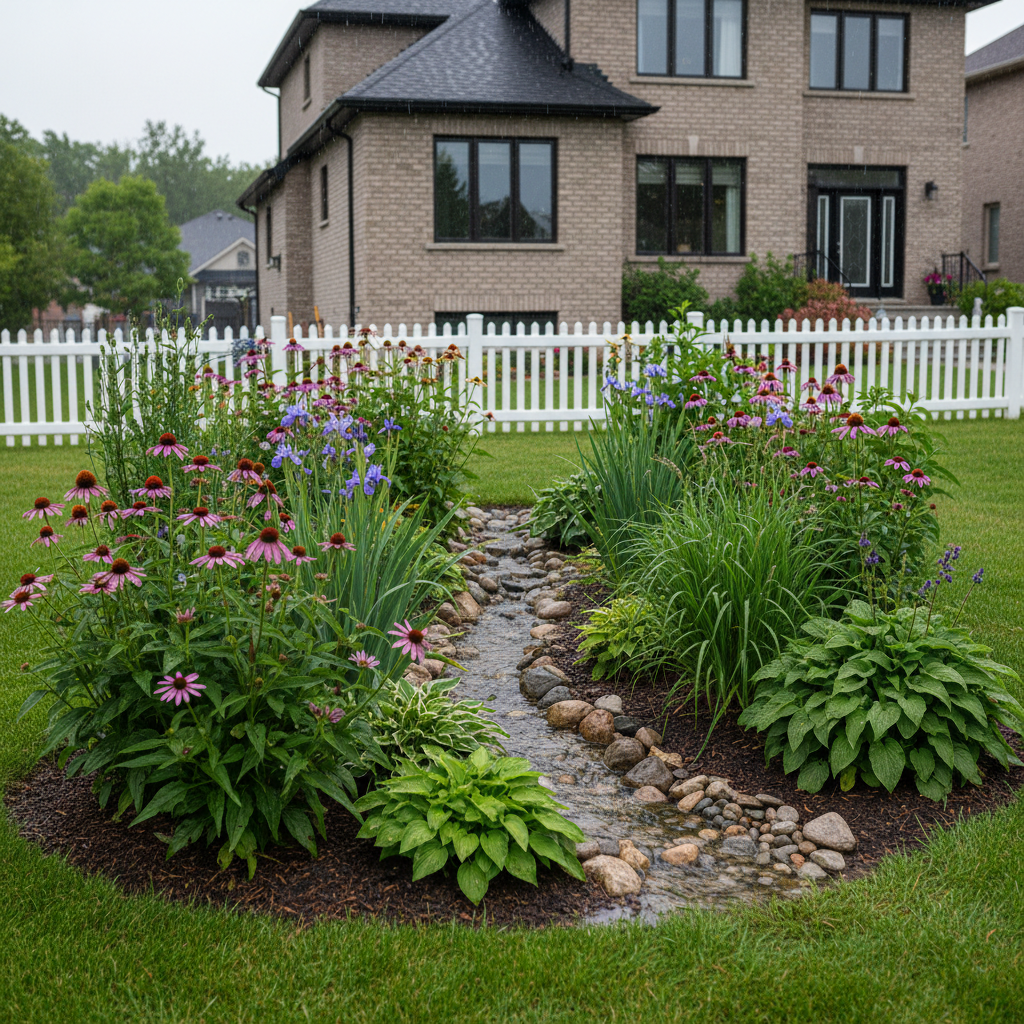
- Is any part of the property within a regulated floodplain? Check with the local Conservation Authority. Floodplain mapping is public information.
- Has the neighbourhood experienced basement flooding? Ask neighbours, check with the municipal engineering department, and look for signs in the basement (water stains, efflorescence, sump pump).
- Is the property at a topographic low point relative to surrounding lots? Water flows downhill, and low spots collect runoff.
- Does the neighbourhood have combined or separated sewers? Combined systems carry higher flood risk during heavy rain.
- Are there visible green stormwater infrastructure features like rain gardens, bioswales, or permeable surfaces? Their presence indicates forward-thinking design.
- Visit the neighbourhood during or immediately after a heavy rainstorm. Observe where water pools, flows, and drains.
Walkability and Transportation
- Are there continuous sidewalks on both sides of the street? Walk the route from the property to the nearest grocery store, school, park, and transit stop.
- What is the posted speed limit on the residential street? Are there traffic calming features?
- How many useful daily destinations (grocery, pharmacy, school, library, park, medical clinic) are within a 15-minute walk?
- Is there a connected cycling network, or at minimum, low-traffic routes suitable for cycling?
- How is winter sidewalk maintenance handled? Walk the area in January or February to see the real conditions.
- Remember that online walkability scores often miss important factors in smaller Ontario communities. In-person evaluation is essential.
Green Space and Nature Access
- Is there a quality park or green space within a five-minute walk (roughly 400 metres)?
- Does the nearest park have mature trees, varied features (playground, paths, seating), and good maintenance?
- Are there trail connections to larger natural areas or conservation lands?
- What is the tree canopy coverage on the street and in the immediate neighbourhood? Mature trees provide shade, cooling, air filtration, and stormwater management.
- Is the municipality investing in its parks and green space, or are facilities in decline? Check the parks master plan on the municipal website.
Noise Environment
- Visit the property at different times of day, including early morning and evening. Listen for highway drone, rail noise, aircraft flight paths, and industrial sound.
- Is the property within 300 metres of a railway line? Rail noise, vibration, and the chemicals transported by rail are all relevant considerations.
- Are there noise barriers or natural buffers (berms, dense vegetation) between the property and major noise sources?
- Check the municipal noise bylaw. How are complaints handled? Is there a history of noise issues in the area?
- Our article on noise pollution and residential health covers the health effects and what to listen for in more detail.
Heat and Microclimate
- Is the neighbourhood dominated by hard surfaces (wide roads, large parking lots, minimal vegetation)? These areas will be significantly hotter during summer.
- Does the property have mature shade trees, particularly on the south and west sides where afternoon sun hits hardest?
- Is the home well-insulated and equipped with air conditioning? In areas prone to heat, these are health necessities rather than luxuries.
- Are there cooling centres or air-conditioned public spaces (library, community centre) within walking distance for use during extreme heat events?
Environmental Contamination
- Search the Ontario Brownfields Environmental Site Registry for the property address and surrounding area.
- Were there former gas stations, dry cleaners, auto repair shops, or industrial facilities on or near the property? These uses can leave persistent soil and groundwater contamination.
- If the home was built before 1990, has it been tested for radon? Radon is a leading cause of lung cancer among non-smokers, and testing is simple and inexpensive.
- Does the municipality have a cosmetic pesticide bylaw? This affects what chemicals are applied in your neighbourhood.
Community and Social Infrastructure
- Is there a library, community centre, or recreation facility within reasonable distance?
- Are there gathering spaces where residents interact: coffee shops, farmers' markets, community gardens, or public squares?
- Talk to neighbours. Ask what they like about the area and what concerns them. Long-term residents can identify issues that no database or report will reveal.
- Is the community growing, stable, or declining? Growth can bring new amenities but also construction disruption and strained infrastructure. Decline may mean reduced services.
Municipal Governance and Transparency
- Does the municipality publish water quality reports, air monitoring data, and environmental compliance information on its website?
- Is there an official plan that addresses environmental health, green infrastructure, and climate adaptation?
- How responsive is the municipality to resident concerns? Check council meeting minutes for environmental topics.
- Does the local public health unit provide accessible, area-specific health and environmental data?
Using This Checklist
No neighbourhood will score perfectly on every item. The goal is not perfection but awareness. By systematically evaluating these factors, you can identify potential issues before they become costly problems and make an informed comparison between different communities and neighbourhoods.
Some items can be checked online before visiting. Others require an in-person visit, ideally at different times of day and in different weather conditions. Budget time for this research. The house itself might be perfect, but if the community around it has unaddressed environmental issues, your long-term health and satisfaction will suffer.
For a broader perspective on how to approach the research process, our guide to evaluating environmental quality before moving provides additional context and resources specific to Ontario.