Biodiversity in Your Backyard
Healthy Landscapes Ontario | November 25, 2025
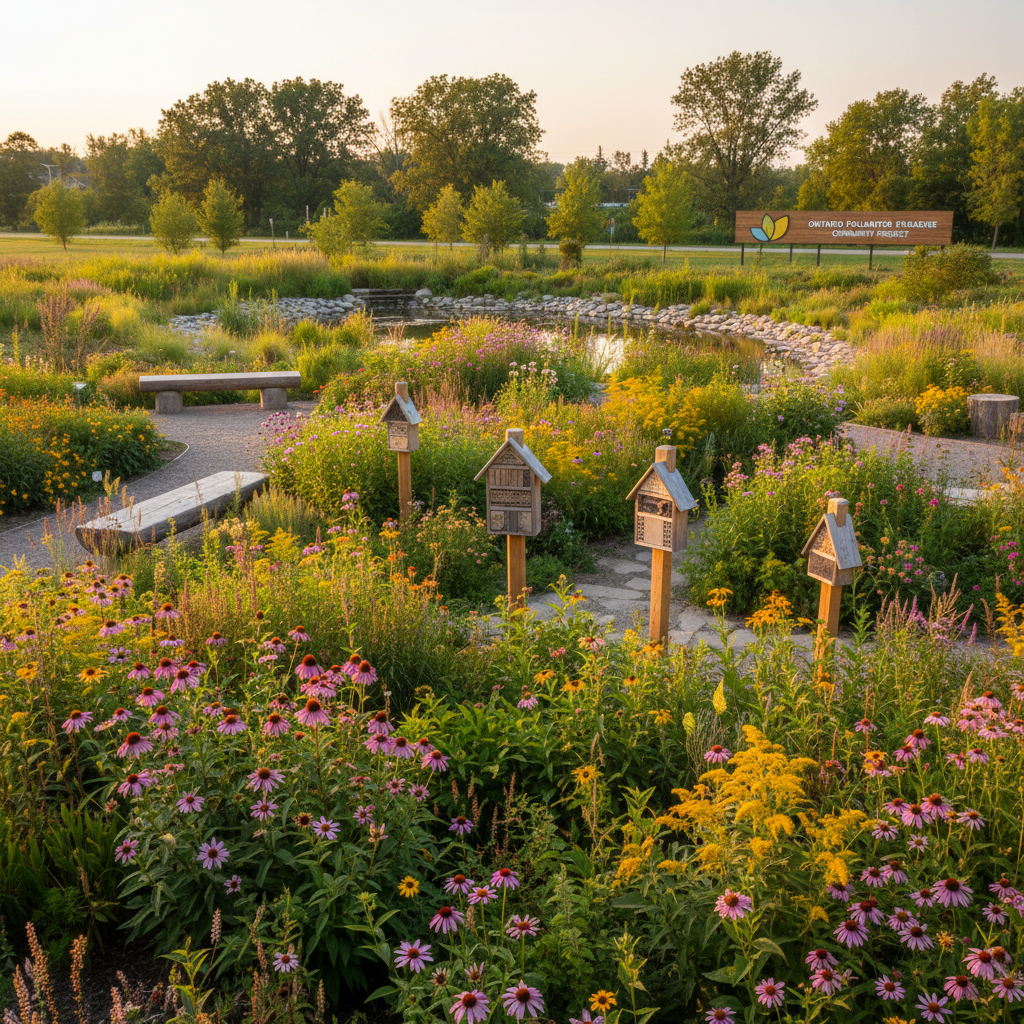
Native pollinator gardens provide food and habitat for bees, butterflies, and other beneficial insects that are essential to healthy ecosystems.
Biodiversity is not something that only exists in national parks and wilderness areas. Your backyard, balcony, or front yard is part of a living landscape, and the choices you make about what you plant, how you maintain your property, and what features you add can meaningfully support the web of life around you.
Ontario is home to more than 3,000 plant species, over 400 bird species, and thousands of insect species. Many of these are under pressure from habitat loss, pesticide use, climate change, and invasive species. The good news is that residential landscapes, collectively, cover an enormous area and represent a largely untapped opportunity for conservation. This guide offers practical, achievable steps for making your property more biodiverse.
Why Backyard Biodiversity Matters
Urban and suburban landscapes in Ontario are fragmented by roads, buildings, and conventional lawns that provide little habitat value. When individual properties add native plants, water features, nesting habitat, and natural ground cover, they create stepping stones that allow wildlife to move through otherwise inhospitable landscapes.
Research from the University of Guelph and other Ontario institutions has shown that even small urban gardens with native plants support significantly more pollinator species than conventional landscapes. When enough properties in a neighbourhood contribute, the cumulative effect is substantial.
Plant Native
The single most impactful thing you can do for backyard biodiversity is plant native species. Native plants have co-evolved with local insects, birds, and other wildlife over thousands of years. They provide the specific food sources and habitat features that local species need to survive and reproduce.
Here are some reliable native plants for Ontario backyards, organized by light requirements:
Full sun
- Wild bergamot (Monarda fistulosa): A magnet for native bees and hummingbirds. Blooms midsummer.
- Black-eyed Susan (Rudbeckia hirta): Cheerful yellow flowers that bloom all summer. Seeds feed goldfinches in fall.
- Butterfly milkweed (Asclepias tuberosa): Essential for monarch butterflies. Orange flowers are showy and long-lasting.
- Little bluestem (Schizachyrium scoparium): A clumping native grass with outstanding fall colour.
Part shade
- Wild columbine (Aquilegia canadensis): One of the first flowers to bloom in spring. Important for early-season hummingbirds.
- Solomon's seal (Polygonatum biflorum): Graceful arching stems with white bell-shaped flowers.
- Wild geranium (Geranium maculatum): Reliable spring bloomer with pink-purple flowers.
Full shade
- Wild ginger (Asarum canadense): Excellent native ground cover for deep shade.
- Christmas fern (Polystichum acrostichoides): Evergreen fern that provides winter interest and ground cover.
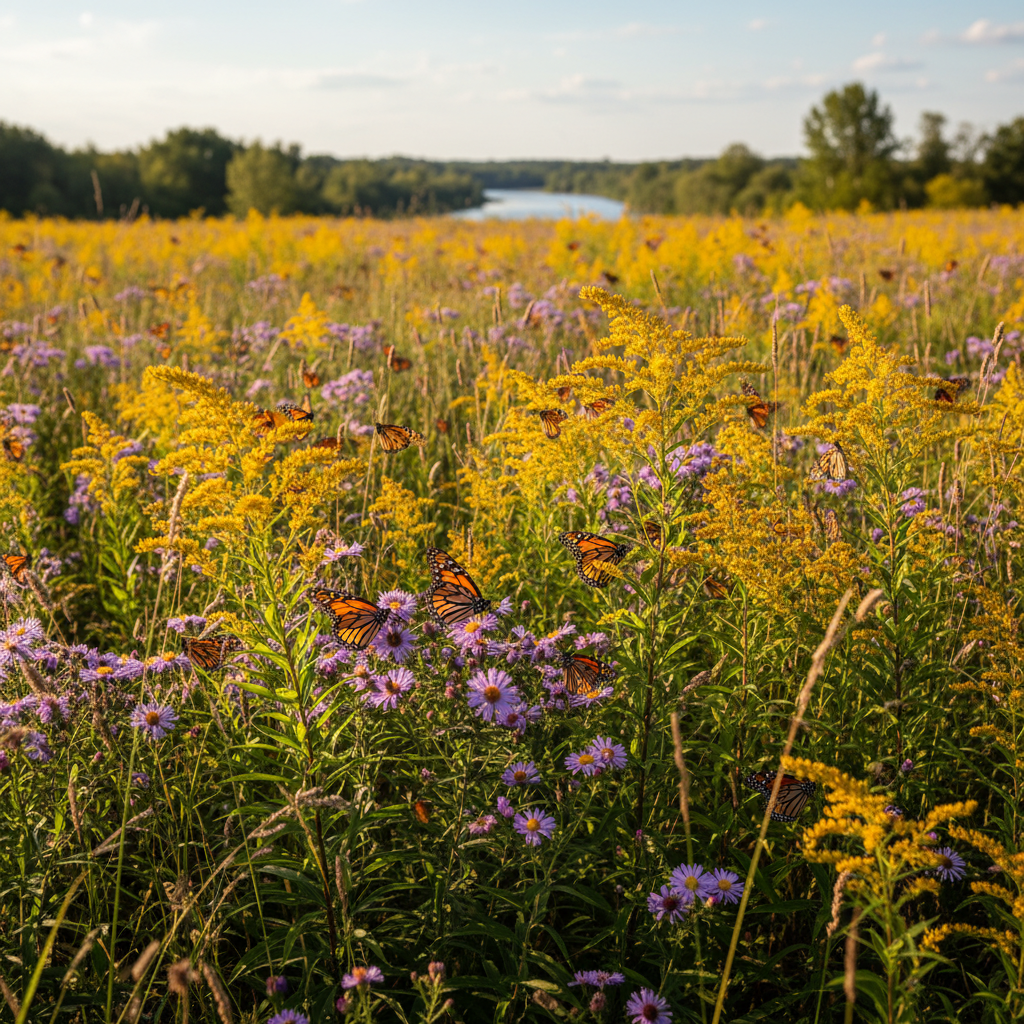
Converting even a portion of a conventional lawn to native meadow plantings dramatically increases the number of species your property supports.
Reduce Your Lawn
Conventional turf grass is a biological desert. It provides almost no food or shelter for wildlife, requires regular mowing, watering, and often fertilizer and pesticides to maintain. You do not need to eliminate your lawn entirely, but reducing it and replacing portions with native plantings, ground covers, or naturalized meadow areas makes a significant difference.
Start small. Convert a sunny border to a pollinator garden. Let a back corner grow into a meadow area that you mow just once or twice a year. Replace a strip of lawn along your fence with a mixed native shrub and perennial border. Each conversion adds habitat and reduces maintenance over time.
Add Habitat Features
Plants are the foundation, but additional features expand the range of species your property can support:
- Water: A shallow dish of water with a few stones for perching is used by birds, bees, butterflies, and other insects. A small pond, even a half-barrel water garden, supports frogs, dragonflies, and other aquatic life.
- Dead wood: Leave fallen logs, branches, and standing dead trees (snags) where they are safe to remain. These are used by woodpeckers, cavity-nesting birds, overwintering insects, and fungi. A brush pile in a back corner provides shelter for toads, chipmunks, and ground-nesting bees.
- Nesting boxes: Bird boxes for wrens, chickadees, bluebirds, and tree swallows compensate for the loss of natural cavities in urban areas. Bat boxes support species that consume large quantities of mosquitoes and other insects.
- Bare ground: About 70 percent of Ontario's native bee species nest in the ground. Leave patches of undisturbed, unmulched soil in sunny areas for ground-nesting bees.
- Leaf litter: In fall, leave leaves on garden beds rather than removing them. They insulate plant roots, provide overwintering habitat for moths, butterflies, and beetles, and break down into rich organic matter.
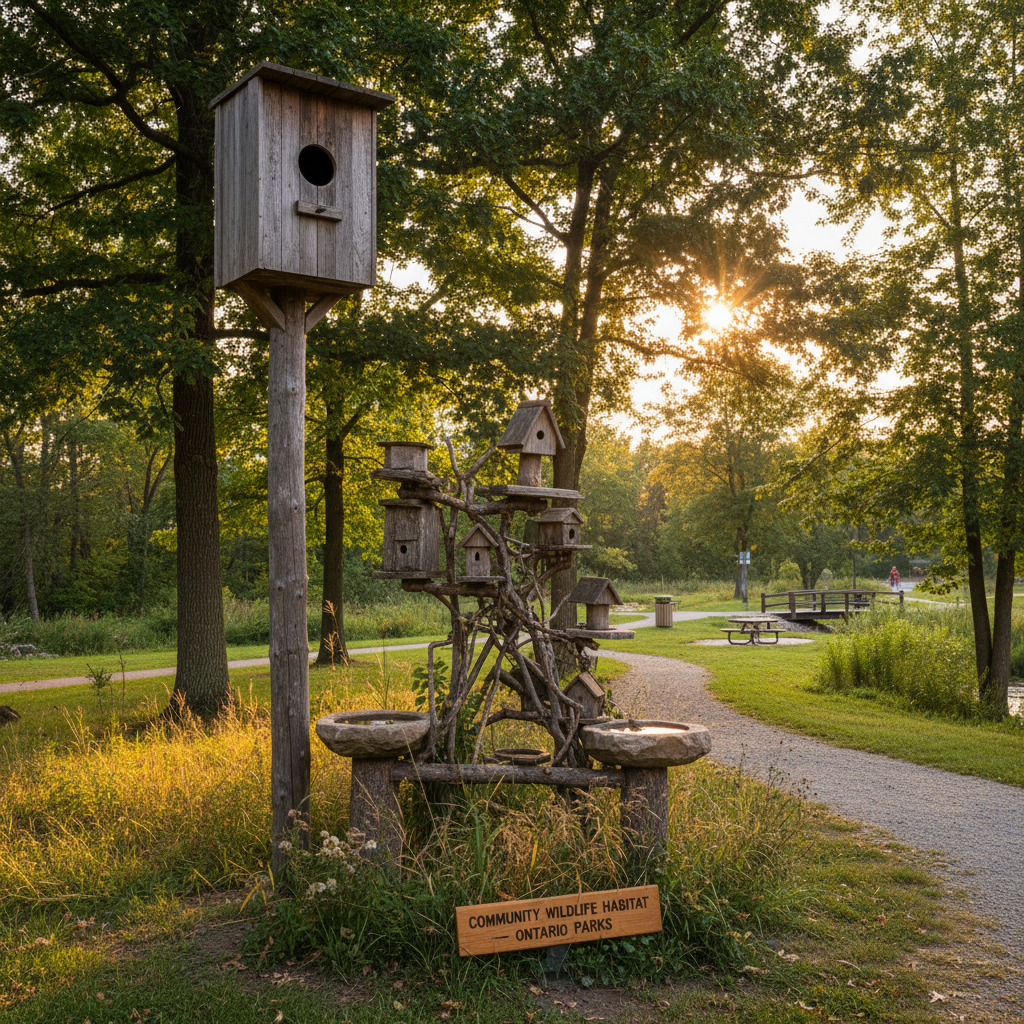
Native berry-producing shrubs like serviceberry and winterberry provide food for birds through fall and winter.
Reduce Chemical Use
Pesticides, herbicides, and synthetic fertilizers harm the soil organisms, insects, and other wildlife that a biodiverse garden depends on. Ontario's cosmetic pesticide ban, in effect since 2009, restricts the use of most lawn pesticides, but many products remain available for specific uses.
The most effective approach is to design your garden so that chemical inputs are unnecessary. Native plants adapted to local soil conditions rarely need fertilizer. A diverse plant community suppresses weeds naturally. Predatory insects keep pest populations in check when they have habitat to live in.
Connect with Your Community
Backyard biodiversity has the greatest impact when neighbours participate. Share plants, seeds, and knowledge with people on your street. Community green space projects and neighbourhood pollinator corridors multiply the benefits of individual efforts by creating connected habitat at a larger scale.
Ontario has a growing network of resources to support backyard naturalization, including Ontario Nature's community science programs, native plant nurseries, and municipal pollinator protection plans. Getting started is easier than you might think, and the rewards, measured in birdsong, butterflies, and the quiet satisfaction of working with nature rather than against it, begin almost immediately.
Frequently Asked Questions
Will a wildlife-friendly yard attract pests?
A biodiverse yard actually reduces pest problems over time. When you support predatory insects like ladybugs, lacewings, and ground beetles, they keep pest populations in check naturally. Native plantings attract far fewer pest species than monoculture lawns treated with fertilizers.
How much of my lawn should I convert to native plantings?
Even converting 10 to 20 percent of a conventional lawn to native plantings makes a measurable difference for pollinators and birds. Start with one garden bed or a border along a fence, and expand as you become comfortable. There is no wrong amount, and every square metre of native habitat counts.
Is it legal to have a naturalized yard in Ontario?
Yes. Ontario municipalities cannot prohibit naturalized gardens, though some have property standards bylaws about vegetation height near sidewalks or sight lines. Many municipalities are updating their bylaws to explicitly support pollinator gardens and naturalized yards. A neat border or edge along the property line helps signal that the naturalization is intentional.
What is the best time of year to start a native garden in Ontario?
Spring (late April to early June) and fall (September to mid-October) are the best planting windows. Fall planting gives roots time to establish before winter dormancy, and many native seeds actually require a period of cold stratification to germinate, making fall sowing of seed particularly effective.