Climate-Ready Community Landscapes
Healthy Landscapes Ontario | December 10, 2025
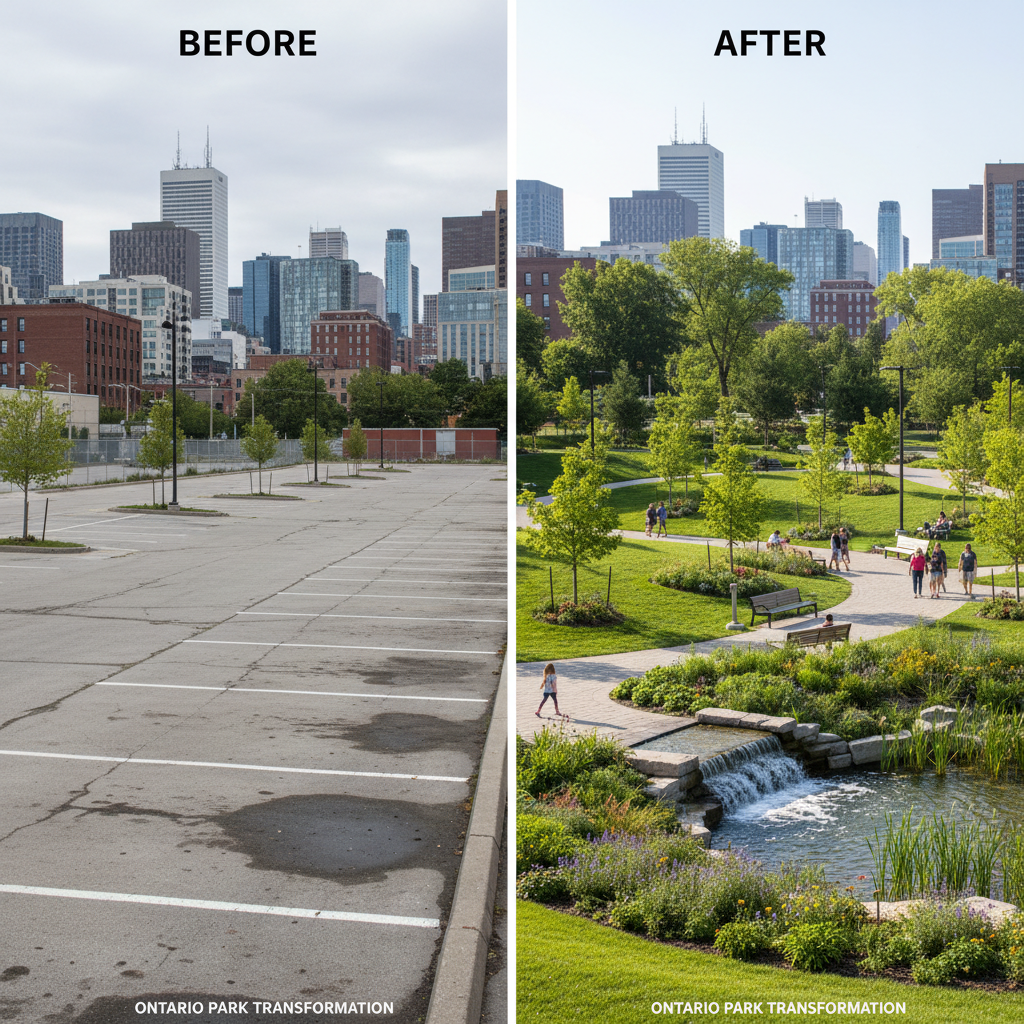
Climate-ready landscapes use a combination of trees, stormwater features, and resilient plantings to protect communities from extreme weather.
Ontario's climate is changing. Summers are hotter. Rainstorms are more intense. Ice storms and wind events are more frequent. Growing seasons are longer, but they come with more drought stress and new pest pressures. The landscapes that surround our homes, line our streets, and fill our parks need to work harder than ever, absorbing water, cooling air, stabilizing soil, and supporting the ecological processes that make communities liveable.
Climate-ready landscaping is the practice of designing and managing outdoor spaces to perform well under these shifting conditions. It is not about predicting the future perfectly but about building flexibility and resilience into every planting and design decision. This guide covers the key principles and practical steps for Ontario communities and homeowners.
Understanding Ontario's Climate Trajectory
According to projections from the Canadian Centre for Climate Services, Ontario can expect:
- Average temperatures 2 to 4 degrees Celsius higher by mid-century
- 15 to 25 percent more precipitation, falling in fewer but more intense events
- Longer, hotter summers with more frequent heat waves exceeding 30 degrees Celsius
- Shorter, milder winters with more freeze-thaw cycles and ice events
- Shifting plant hardiness zones, moving roughly one full zone northward
These changes are already visible. The 2013 Toronto ice storm, the 2018 Ottawa tornadoes, and recurring urban flooding events across the province are not isolated incidents but signals of a new normal that landscape planning must account for.
Design for Water: Too Much and Too Little
The central challenge of climate-ready water management is that Ontario will experience both more flooding and more drought, often in the same year. Landscapes need to absorb heavy rainfall quickly and store moisture for dry periods.
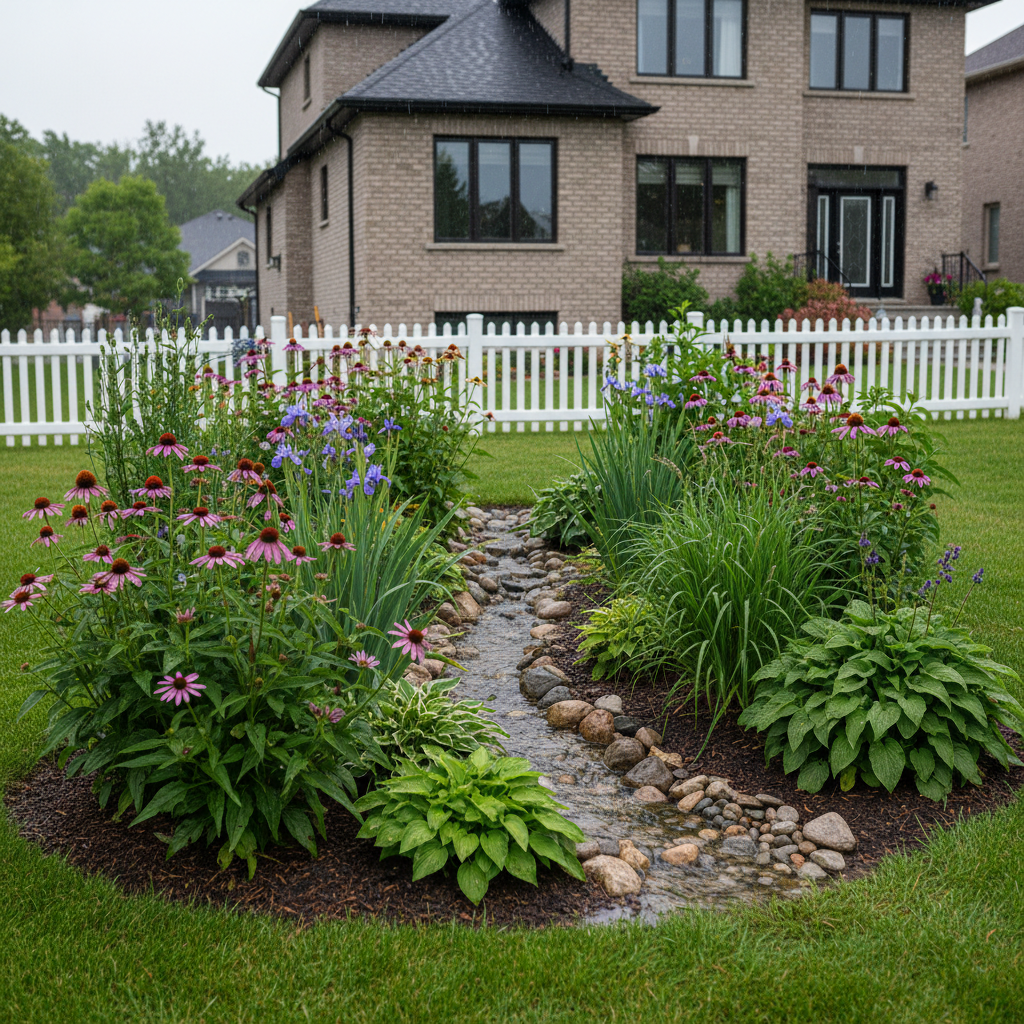
Rain gardens are one of the most practical tools for managing stormwater at the neighbourhood scale while creating attractive green spaces.
Key strategies include:
- Rain gardens and bioswales: These green infrastructure features capture runoff from roofs, driveways, and roads, filtering it through soil and plants. They reduce flooding pressure on storm sewers while recharging groundwater.
- Permeable surfaces: Replacing conventional pavement with permeable alternatives in driveways, patios, and parking areas allows water to infiltrate rather than run off.
- Soil health: Healthy soil with high organic matter content acts like a sponge, absorbing and holding water. Compacted, depleted soil sheds water like pavement. Building soil health through compost, mulch, and reduced compaction is one of the most underappreciated climate adaptation strategies.
- Grading and drainage: Ensure that all hard surfaces and landscapes direct water away from foundations and toward areas designed to absorb it. Simple grading improvements prevent the basement flooding that is increasingly common during intense rainstorms.
For a detailed look at residential applications, see our guide to stormwater management for residential properties.
Design for Heat
As heat waves become longer and more severe, cooling landscapes become essential for public health, particularly for seniors, children, outdoor workers, and people without air conditioning.
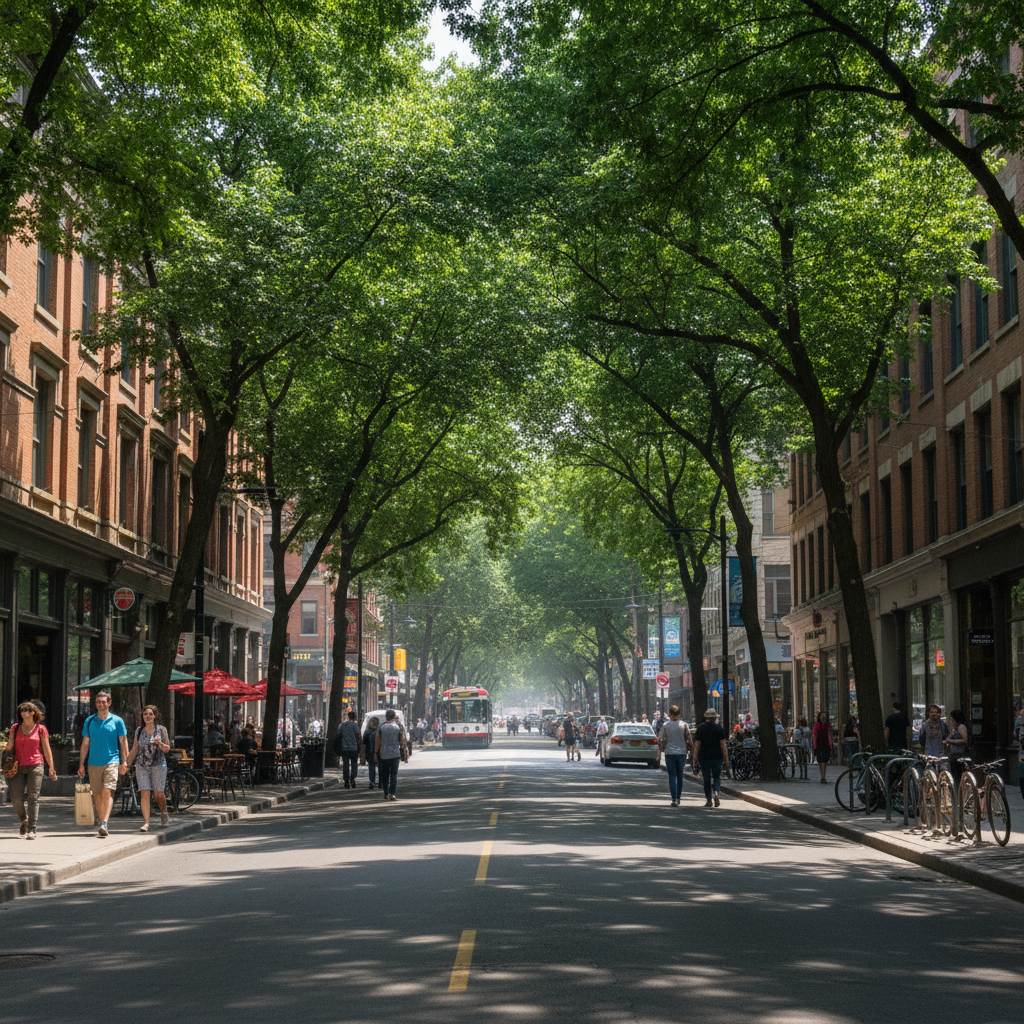
Mature shade trees are the most effective tool for reducing urban heat, cooling streets and buildings by several degrees.
- Expand tree canopy: Trees are the most effective cooling infrastructure available. A single mature tree provides the cooling equivalent of several residential air conditioners. Prioritize planting on south and west facing exposures where solar gain is greatest. See our guide to urban tree canopy for more.
- Reduce hard surfaces: Every square metre of asphalt or concrete that can be replaced with vegetation or permeable surfaces reduces heat storage and radiation.
- Design shaded public spaces: Parks, playgrounds, transit stops, and outdoor seating areas all need shade. Where tree canopy is not yet mature, shade structures and pergolas can provide interim relief.
- Use light-coloured surfaces: When hard surfaces are necessary, lighter-coloured materials reflect more solar radiation and store less heat than dark asphalt.
Choose Resilient Plants
Climate-ready plant selection means thinking beyond current conditions to the conditions your landscape will face in 10, 20, and 50 years. Key principles include:
- Diversity: Plant a wide mix of species so that no single pest, disease, or weather event can devastate your entire landscape.
- Range of moisture tolerance: Select species that can handle both wet springs and dry summers. Deep-rooted native species are generally more resilient than shallow-rooted ornamentals.
- Consider assisted migration: Some landscape professionals are beginning to include species from slightly south of their current range, anticipating northward shifts in suitable habitat. This is a topic of active research and should be approached thoughtfully.
- Prioritize native species: Native plants are adapted to local soil, climate, and ecological relationships. They are the foundation of a resilient landscape.
Build Soil Health
Healthy soil is the invisible foundation of climate-ready landscapes. Soil with high organic matter content holds more water during droughts, absorbs more water during storms, supports deeper root growth, sequesters carbon, and sustains the microbial communities that plants depend on for nutrient uptake.
Practical steps to build soil health include applying 5 to 10 centimetres of organic mulch around plantings, composting yard waste and returning it to garden beds, minimizing soil compaction from foot traffic and machinery, and reducing or eliminating synthetic fertilizers that can harm soil biology.
Plan for the Long Term
Climate adaptation is not a one-time project. It is an ongoing process of observation, adjustment, and reinvestment. Plant trees now that will provide shade in 15 years. Build rain gardens that will handle the storms of the 2030s. Choose species mixes that give your landscape the flexibility to adapt as conditions evolve.
The communities that invest in climate-ready landscapes today will be cooler, safer, more attractive, and more resilient than those that wait. And because many of these strategies also reduce maintenance costs, support biodiversity, and improve quality of life, they make sense even without the climate imperative.
Frequently Asked Questions
What does climate-ready landscaping mean?
Climate-ready landscaping means designing and managing outdoor spaces to withstand and adapt to changing climate conditions, including more frequent heat waves, intense rainstorms, prolonged droughts, and shifting growing seasons. It involves species selection, water management, soil health, and design strategies that build resilience.
How is Ontario's climate changing?
Ontario is experiencing warmer average temperatures (especially in winter), more intense rainfall events, longer and hotter summers, more frequent ice storms, and shifting plant hardiness zones. Southern Ontario's climate is projected to resemble that of present-day Maryland or Virginia by mid-century.
What are the best trees for climate resilience in Ontario?
Species that tolerate a range of moisture conditions and heat stress are best. Bur oak, hackberry, Kentucky coffee tree, red oak, and swamp white oak are strong choices. Diversity is critical because no single species can withstand all future conditions, so planting a mix of drought-tolerant and flood-tolerant species hedges against uncertainty.
Can climate-ready landscaping reduce my property insurance costs?
Some insurance providers are beginning to recognize property-level flood mitigation measures. While direct premium reductions are not yet widespread in Ontario, features like grading improvements, rain gardens, and sump pump backups can reduce the risk of water damage claims, which may influence coverage decisions over time.