Park Design for All Ages
Healthy Landscapes Ontario | January 10, 2026
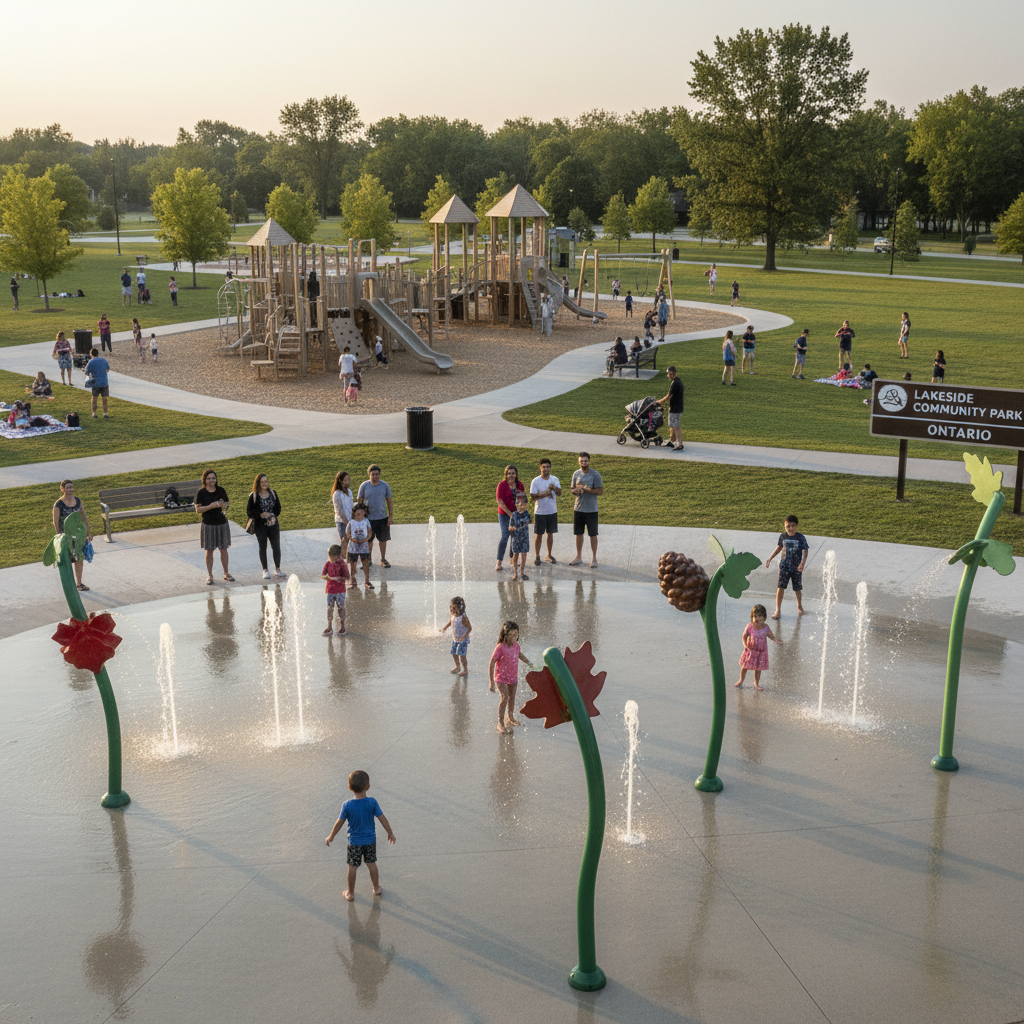
The best parks accommodate multiple generations at once, allowing families to enjoy shared outdoor time while each person finds something that suits them.
A truly great park is not designed for one age group. It serves the toddler on the swing, the teenager on the basketball court, the parents watching from a bench, the retiree walking the loop trail, and the person in a wheelchair navigating the paths. When a park serves everyone, it becomes a place where community happens naturally, where generations mix and neighbours connect.
Designing for all ages requires intentional choices about layout, features, accessibility, and the relationships between different activity zones. This guide covers the principles and practical details that make multi-generational park design work in Ontario communities.
Think in Zones, Not Age Groups
Rather than designing separate areas for children, teens, and adults, think about activity zones that naturally attract different users while keeping them in visual and social proximity:
- Active play zones: Playgrounds, splash pads, sport courts, and climbing features. These are primarily used by children and teens but are more welcoming when adjacent seating allows parents and grandparents to watch comfortably.
- Social gathering zones: Picnic areas, covered pavilions, barbecue stations, and flexible lawn spaces. These serve all ages and are especially important for cultural events, family gatherings, and community programming.
- Quiet zones: Gardens, reading nooks, nature areas, and contemplative spaces. These attract older adults, people seeking solitude, and anyone who needs a break from activity.
- Movement zones: Walking loops, cycling paths, fitness stations, and open areas for yoga, tai chi, or informal exercise. These serve adults and seniors most directly but benefit all ages.
The key is to locate these zones so that they overlap and interact rather than isolating different user groups. A walking loop that passes the playground, the picnic area, and the garden creates opportunities for natural mixing.
Design for Seniors
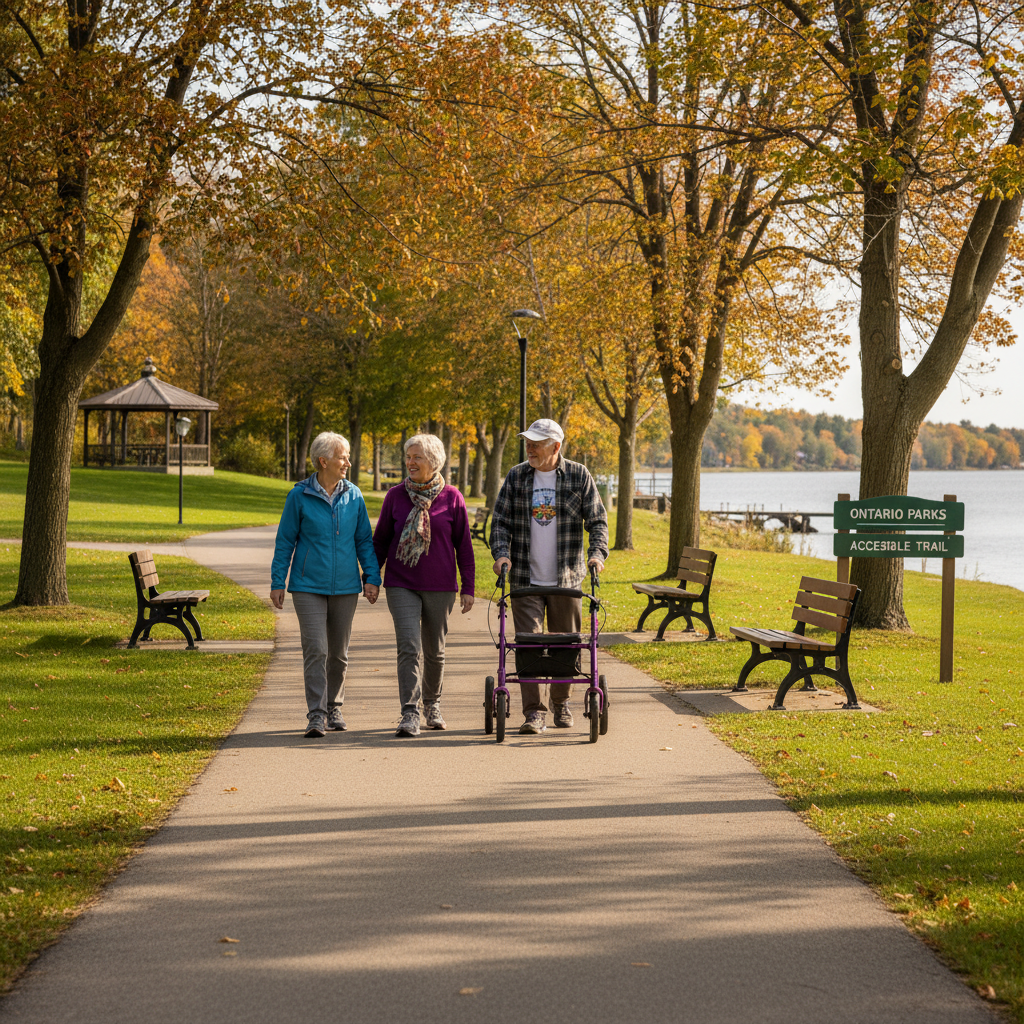
Parks that include comfortable seating, shade, smooth paths, and gardens become daily destinations for seniors, supporting physical and social health.
Ontario's population is aging rapidly. By 2030, adults over 65 will make up more than 20 percent of the provincial population. Parks that do not work for seniors are parks that fail a large and growing portion of the community.
Features that make parks senior-friendly:
- Frequent seating: Benches every 50 to 100 metres along walking paths, with backrests and armrests to assist people who have difficulty standing up. Include some seating in sun and some in shade.
- Smooth, firm paths: Granular or asphalt paths with gentle grades (under 5 percent) and no abrupt level changes. Ensure paths are wide enough for walkers, wheelchairs, and mobility scooters to pass comfortably.
- Accessible washrooms: Close to popular gathering areas, open during park hours, and designed to AODA standards.
- Gardens and nature features: Raised garden beds at seated height, sensory gardens with fragrant plants, bird feeding areas, and interpretive signage about local ecology.
- Social infrastructure: Chess tables, bocce courts, outdoor fitness equipment designed for older adults, and covered areas for group activities like tai chi or outdoor fitness classes.
Design for Children and Families
Children's play areas are the most visible and often the most used feature of any park, but good design goes beyond installing standard playground equipment:
- Nature play: Incorporate natural materials like logs, boulders, sand, and water into play areas. Research consistently shows that children engage more deeply and creatively with natural play features than with plastic equipment alone.
- Risk and challenge: Good playgrounds offer graduated challenge, features that allow children to test their limits at their own pace. Climbing structures, balance elements, and height provide the healthy risk that child development experts recommend.
- Shade: With rising summer temperatures, shade over play areas is not optional. Plant trees on the south and west sides of playgrounds, and install shade structures where tree canopy is not yet mature.
- Parent comfort: Locate seating where parents can see the entire play area. Include shade, electrical outlets for device charging, and proximity to washrooms.
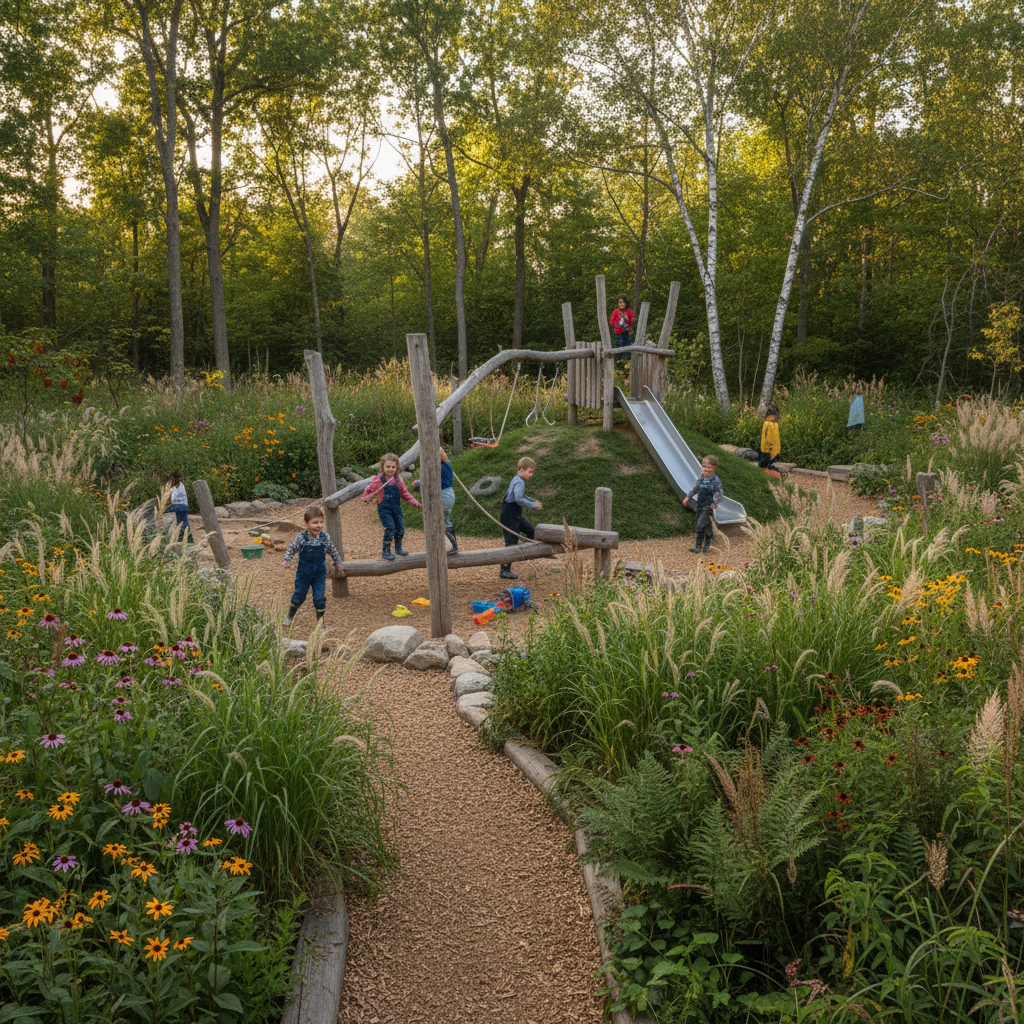
Natural play features encourage imaginative, physical, and social play while connecting children with the natural world.
Design for Teenagers
Teenagers are the most underserved age group in park design. They have outgrown playgrounds but do not feel welcome in spaces designed for young children or older adults. When parks have nothing for teens, they either avoid them entirely or use spaces in ways that create conflict with other users.
Effective teen spaces include sport courts (basketball, volleyball, tennis), skateboard features, informal seating areas with some privacy from adult oversight, Wi-Fi access, open lawn for pickup games and socializing, and good lighting for evening use. The most important design principle for teen spaces is to involve teens directly in the design process. Adults consistently misjudge what teenagers actually want.
Accessibility as a Foundation
Accessibility is not a feature to be added after the design is complete. It is a foundation that shapes every decision from the outset. Ontario's Accessibility for Ontarians with Disabilities Act (AODA) sets standards for recreational trails, outdoor public spaces, and play areas. Meeting these standards is a legal requirement, but truly inclusive design goes further.
Inclusive play equipment that allows children of all abilities to play together, wheelchair-accessible pathways that connect all park features, seating options for people who cannot use standard benches, and sensory features for people with visual or hearing impairments all contribute to a park that genuinely serves everyone.
Safety Through Design
Safety in parks comes primarily from good design, not from cameras or fences. The principles of Crime Prevention Through Environmental Design (CPTED) are well established and highly applicable to trail and park planning:
- Maintain clear sight lines throughout the park so that users can see and be seen.
- Light pathways, gathering areas, and parking lots adequately for evening use.
- Provide multiple access points so that no one feels trapped or isolated.
- Design the park to attract consistent, daily use, because a well-used park is a safe park.
- Avoid dense plantings that block sight lines near pathways and gathering areas.
Community Input Shapes Better Parks
The best all-ages parks are designed with input from all ages. Community engagement that reaches beyond the usual public meeting attendees is essential. Talk to school classes, seniors groups, teen drop-in centres, accessibility advocates, cultural organizations, and families in the park itself. When diverse voices shape the design, the result is a park that works for the whole community.
Frequently Asked Questions
What makes a park accessible for people with disabilities?
Accessible parks include firm, level pathways wide enough for wheelchairs (minimum 1.5 metres), accessible play equipment, seating at regular intervals, accessible washroom facilities, sensory elements for people with visual impairments, and smooth transitions between surfaces. Ontario's AODA standards provide specific requirements for recreational trails and outdoor public spaces.
How do you design parks for teenagers?
Teens need spaces that offer autonomy, socialization, and activity. Effective features include basketball or multi-sport courts, skateboard areas, informal seating clusters away from playgrounds, Wi-Fi access, shade structures, and open lawn areas for unstructured activity. Involving teens directly in the design process is essential because adults frequently misjudge what teens actually want.
What is the recommended size for a neighbourhood park?
Ontario planning standards typically recommend neighbourhood parks of 0.5 to 2 hectares, serving residents within a 400 to 800 metre walk. The ideal size depends on the mix of uses planned. Even very small pocket parks (under 0.25 hectares) can serve communities well if designed thoughtfully for a specific purpose like seating, shade, or a small play area.
How do you keep parks feeling safe for all users?
Safety in parks comes primarily from design, not surveillance. Key principles include maintaining clear sight lines so users can see and be seen, ensuring adequate lighting along pathways and at gathering areas, designing multiple access points so no one feels trapped, and activating the space with features that attract regular use throughout the day. A well-used park is a safe park.