Understanding Urban Tree Canopy
Healthy Landscapes Ontario | October 10, 2025
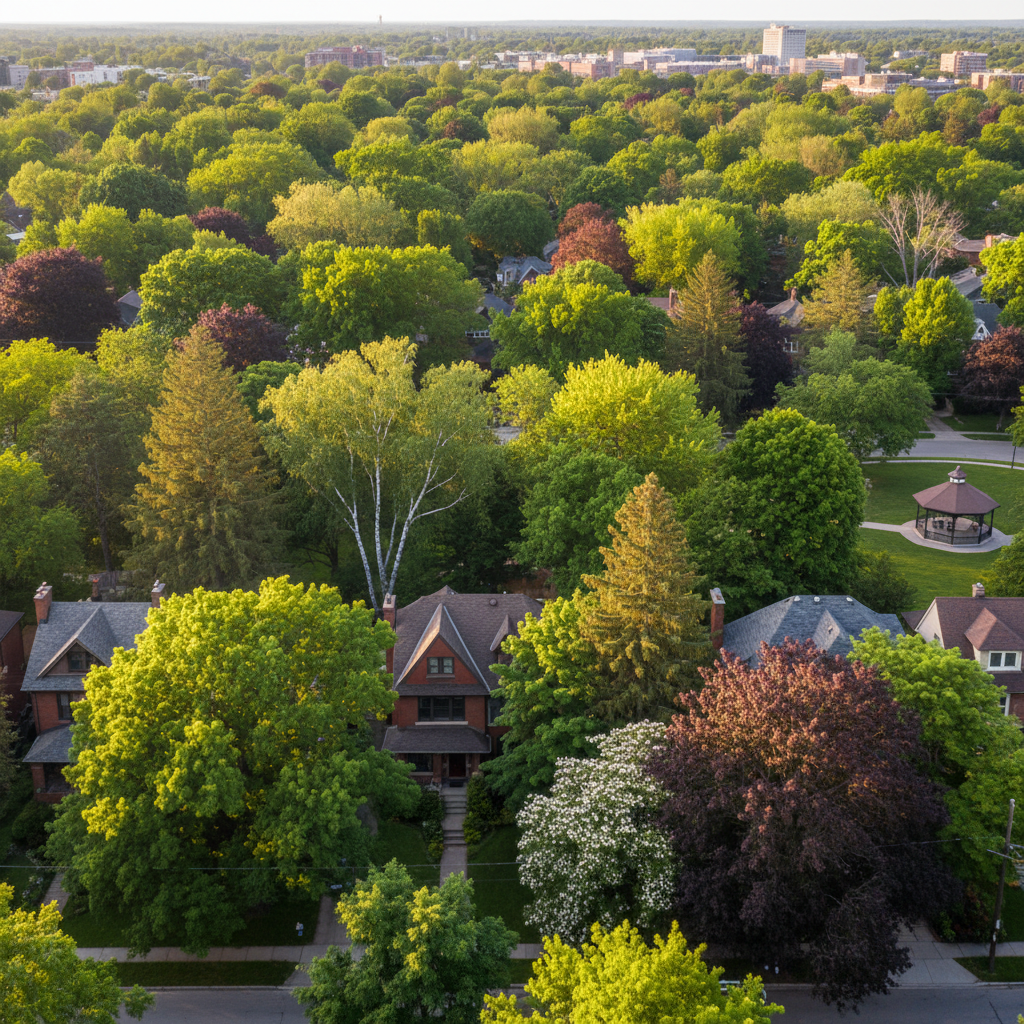
Urban tree canopy is the layer of leaves, branches, and stems that cover the ground when viewed from above.
Urban tree canopy (UTC) refers to the layer of tree leaves, branches, and stems that cover the ground when viewed from above. It is one of the most important indicators of environmental health in cities and towns. In Ontario, where summers are growing hotter and stormwater management is becoming more urgent, tree canopy is not just an amenity but a critical piece of community infrastructure.
This guide explains what urban tree canopy is, why it matters, how Ontario municipalities measure it, and what residents and local governments can do to protect and expand it.
Why Tree Canopy Matters
Trees do more work than most people realize. A mature urban tree provides a range of services that would be expensive to replicate with built infrastructure:
- Cooling: Trees reduce the urban heat island effect by shading surfaces and releasing water through transpiration. Neighbourhoods with high canopy cover can be several degrees cooler than those without.
- Air quality: Trees filter particulate matter, ozone, and nitrogen dioxide from the air. A single mature tree can absorb roughly 22 kilograms of carbon dioxide per year.
- Stormwater management: Tree canopies intercept rainfall, and root systems help water infiltrate the soil rather than running off into storm drains. This reduces flooding and protects water quality in local streams and lakes.
- Mental health: Research consistently shows that access to tree cover reduces stress, improves mood, and supports cognitive function. These benefits are measurable at the neighbourhood scale.
- Property values: Mature trees on residential streets can increase property values by 5 to 15 percent, according to multiple studies across North American cities.
How Canopy Is Measured
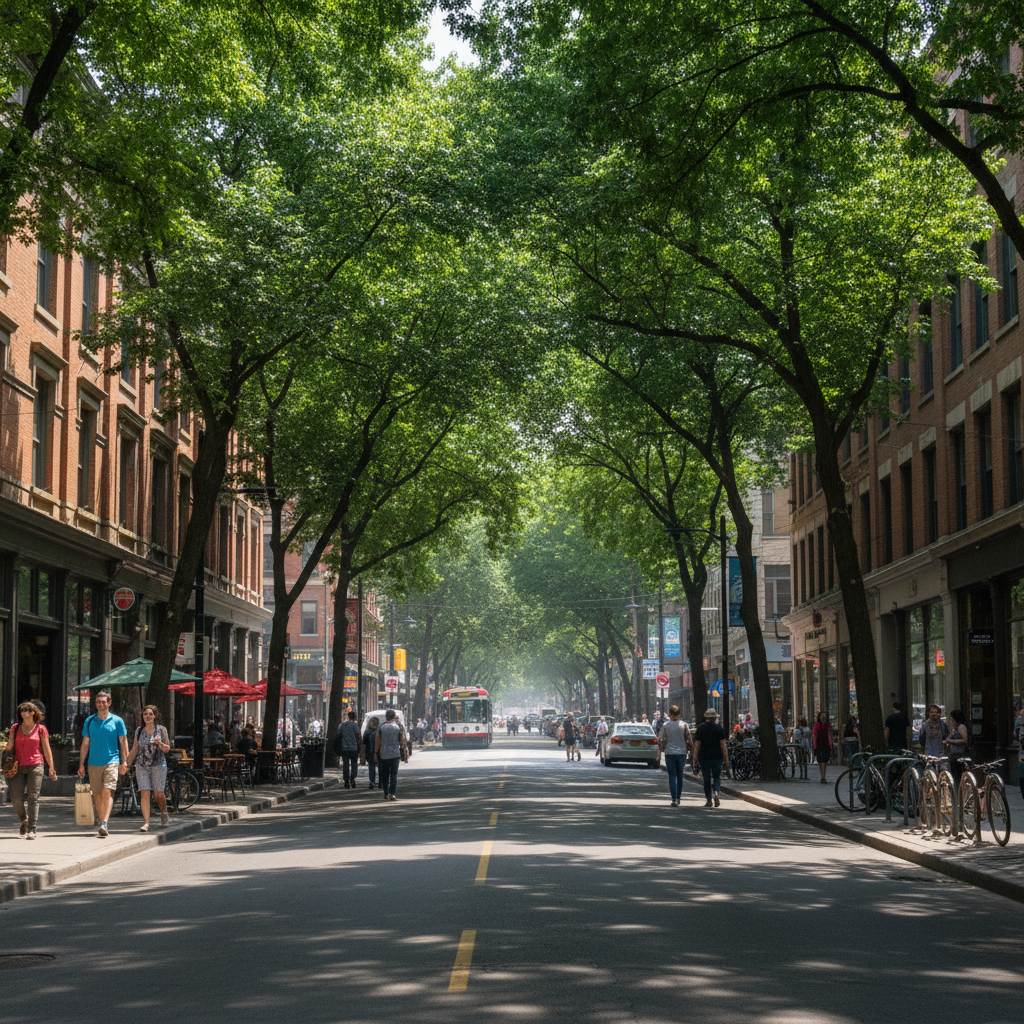
Mature street trees contribute significantly to neighbourhood canopy cover and cooling.
Urban tree canopy is measured as a percentage of total land area. Municipalities typically use aerial imagery or LiDAR (Light Detection and Ranging) data to map canopy coverage across the entire community. The analysis divides the landscape into canopy, impervious surfaces (buildings, roads, parking lots), pervious surfaces (lawns, bare ground), and water.
Many Ontario municipalities have conducted UTC assessments in recent years. Toronto, for example, has a canopy cover of approximately 28 percent and a target of 40 percent. Smaller cities vary widely, with some older towns exceeding 35 percent and newer suburban communities sitting below 15 percent.
The Ontario Tree Atlas is a useful resource for understanding tree species distribution across the province, while individual municipalities often publish their own canopy studies.
Threats to Urban Tree Canopy
Ontario's urban tree canopy faces several pressures:
- Development: New construction frequently removes mature trees that took decades to grow. Replacement plantings, even when required by municipal bylaws, take years to provide equivalent canopy.
- Invasive pests: The emerald ash borer has killed millions of ash trees across Ontario since arriving in the early 2000s. Other threats include the Asian long-horned beetle and oak wilt disease.
- Climate stress: Prolonged droughts, ice storms, and extreme heat events weaken trees and increase mortality. As Ontario's climate continues to shift, some species that were well-suited to local conditions may struggle.
- Lack of diversity: Many municipalities planted heavily from a limited palette of species. When a pest or disease targets one species, entire streetscapes can be lost.
Protecting and Expanding Canopy
Building and maintaining a healthy tree canopy requires action at both the municipal and individual level.
What municipalities can do
- Adopt tree protection bylaws that require permits for removing trees above a certain size, both on public and private land.
- Set canopy targets and track progress through regular UTC assessments.
- Require tree planting in new developments through site plan conditions and subdivision agreements.
- Diversify species in municipal planting programs, following the 10-20-30 rule: no more than 10 percent of any one species, 20 percent of any genus, or 30 percent of any family.
- Invest in green infrastructure that supports tree health, including adequate soil volumes, structural soil cells, and proper drainage.
What residents can do
- Plant trees on your property and choose native species suited to your soil and light conditions.
- Water young trees during their first three summers. A slow, deep soak once a week during dry periods makes a significant difference in survival rates.
- Advocate for tree protection at planning meetings and development hearings in your municipality.
- Join community tree planting events organized by local conservation authorities, neighbourhood associations, or municipal forestry departments.

Aerial imagery reveals the uneven distribution of tree canopy across neighbourhoods, with older areas often having significantly more cover.
Canopy Equity
Not all neighbourhoods have equal access to tree canopy. Across Ontario and beyond, lower-income neighbourhoods and areas with higher proportions of renters tend to have less tree cover. This is sometimes called the "canopy gap," and it has real consequences for health, comfort, and energy costs.
Several Ontario municipalities are now incorporating equity into their urban forestry strategies, prioritizing tree planting in underserved neighbourhoods. Connecting climate-ready landscaping with canopy equity ensures that the communities most vulnerable to extreme heat receive the most investment in cooling infrastructure.
Looking Ahead
Urban tree canopy is not a static feature. It grows, declines, and changes with every development approval, storm event, and planting season. The communities that will be most liveable in coming decades are those investing in their canopy now, planting diverse species, protecting mature trees, and treating tree cover as the essential infrastructure it is.
Frequently Asked Questions
What is a good urban tree canopy percentage?
Experts generally recommend 30 to 40 percent canopy cover for urban areas. Many Ontario cities currently fall between 15 and 30 percent, with older neighbourhoods typically having higher cover than newer subdivisions or industrial areas.
How much can a single tree reduce summer temperatures?
A mature shade tree can reduce surface temperatures beneath it by 10 to 15 degrees Celsius compared to sun-exposed pavement. A neighbourhood with 30 percent or more canopy cover can be 2 to 4 degrees cooler overall than one with minimal tree cover.
What are the best trees to plant in Ontario cities?
Ontario cities benefit from a diverse mix of native species such as red oak, sugar maple, white pine, bur oak, and hackberry. Diversity is key because relying on a single species creates vulnerability to pests and diseases, as the emerald ash borer crisis demonstrated.
How long does it take for a newly planted tree to provide significant shade?
Most shade trees take 10 to 20 years to develop a canopy large enough to provide meaningful cooling. Fast-growing species like silver maple or Freeman maple produce noticeable shade within 8 to 12 years, while slower species like bur oak take longer but live much longer.