Green Infrastructure Basics for Ontario Communities
Healthy Landscapes Ontario | October 25, 2025
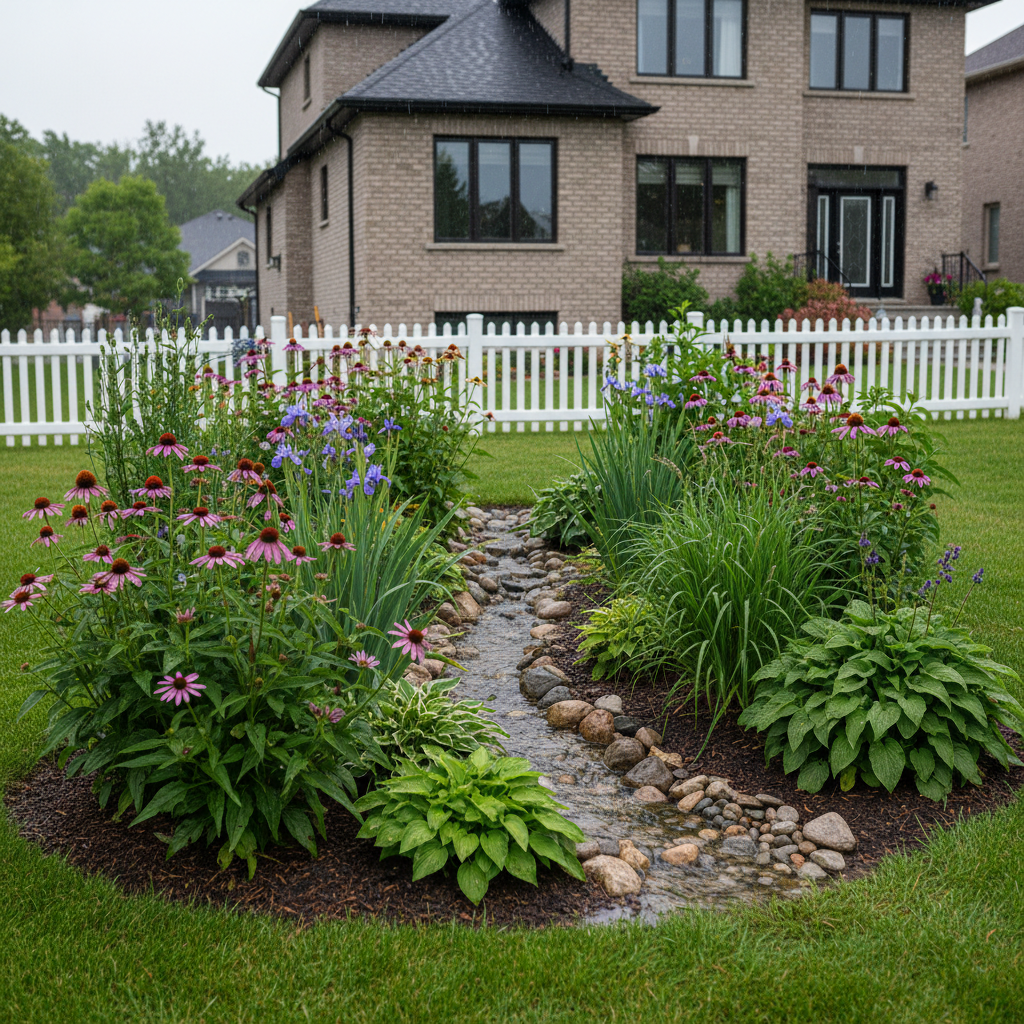
Rain gardens capture and filter stormwater runoff, reducing pressure on municipal storm sewer systems while creating attractive green spaces.
Green infrastructure is an approach to managing water, heat, and ecological health that works with natural systems rather than replacing them. Instead of channelling every drop of rain into a pipe, green infrastructure captures, slows, filters, and absorbs water where it falls. Instead of relying solely on air conditioning, it uses trees and vegetation to cool buildings and streets.
For Ontario communities facing more frequent extreme rain events, hotter summers, and aging grey infrastructure, green infrastructure is not an alternative to conventional systems but a necessary complement to them. This guide introduces the key types of green infrastructure and explains how Ontario communities are putting them to work.
What Counts as Green Infrastructure?
Green infrastructure encompasses a broad range of features, from individual rain barrels to watershed-scale forest conservation. The common thread is using natural processes to deliver services that would otherwise require engineered systems. The most common types used in Ontario include:
Rain gardens and bioswales
Rain gardens are shallow, planted depressions designed to capture and absorb stormwater runoff from roofs, driveways, and roads. Bioswales are similar but shaped as linear channels, often placed along roadways or parking lots. Both use a combination of engineered soil, mulch, and deep-rooted plants to filter pollutants and allow water to infiltrate into the ground.
In Ontario, rain gardens perform best when planted with species adapted to both wet and dry conditions. Cardinal flower, blue flag iris, and switchgrass are popular choices that tolerate the fluctuating moisture levels these features experience.
Permeable paving
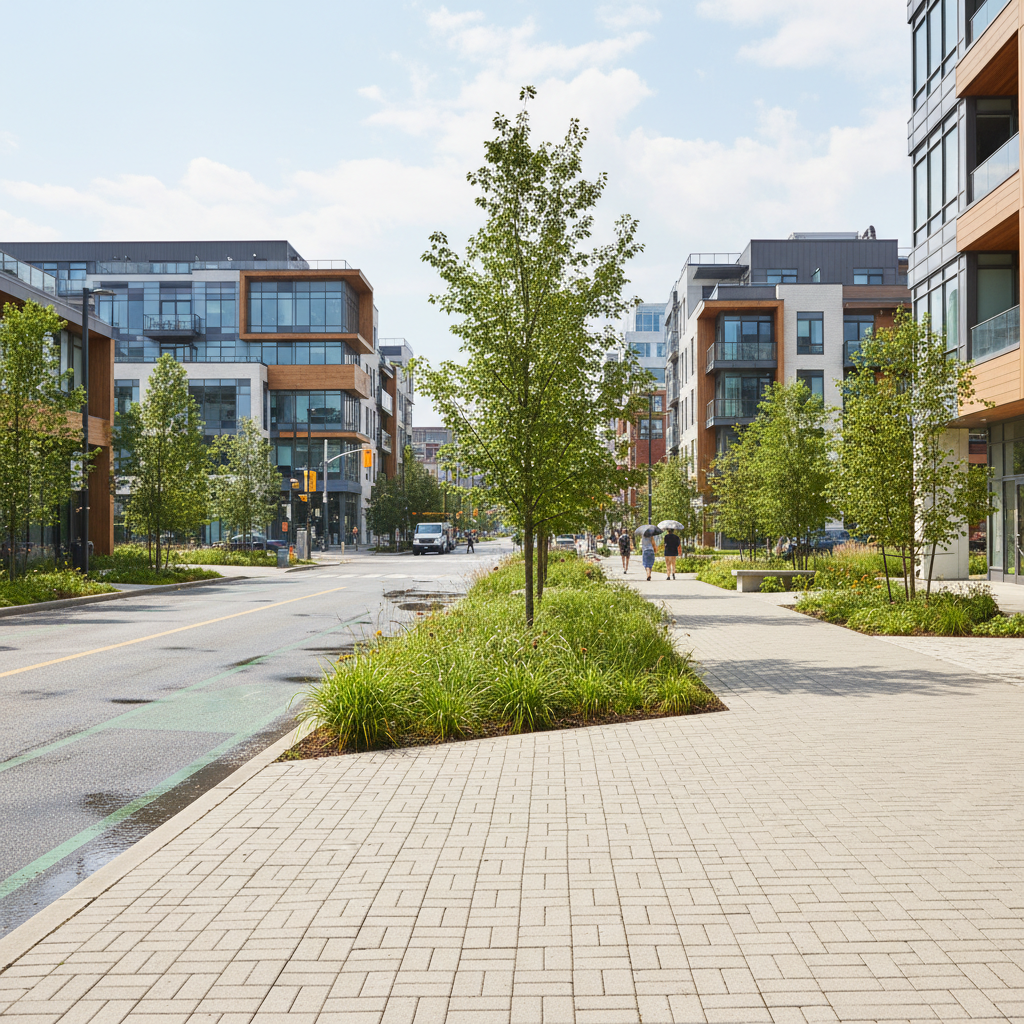
Permeable paving allows rainfall to pass through the surface into a gravel reservoir below, reducing runoff and recharging groundwater.
Permeable paving includes interlocking pavers with open joints, porous asphalt, porous concrete, and gravel systems. These surfaces allow rainwater to pass through into a stone reservoir below, where it infiltrates into the soil or is slowly released into the storm system.
Permeable paving is well suited to parking lots, driveways, patios, and low-traffic laneways. In Ontario, it requires careful design to handle freeze-thaw cycles, and the reservoir base must sit above the water table and be deep enough to function during spring snowmelt.
Green roofs
Green roofs are vegetated systems installed on flat or low-slope rooftops. Extensive green roofs use a thin layer of growing medium (typically 8 to 15 centimetres) planted with drought-tolerant sedums and grasses. Intensive green roofs have deeper soil and can support shrubs, perennials, and even small trees.
Toronto's Green Roof Bylaw, enacted in 2009, requires green roofs on new commercial, institutional, and residential buildings above a certain size. The city has since added over 700 green roofs, making it one of North America's leaders. Other Ontario municipalities are beginning to follow with incentives and requirements of their own.
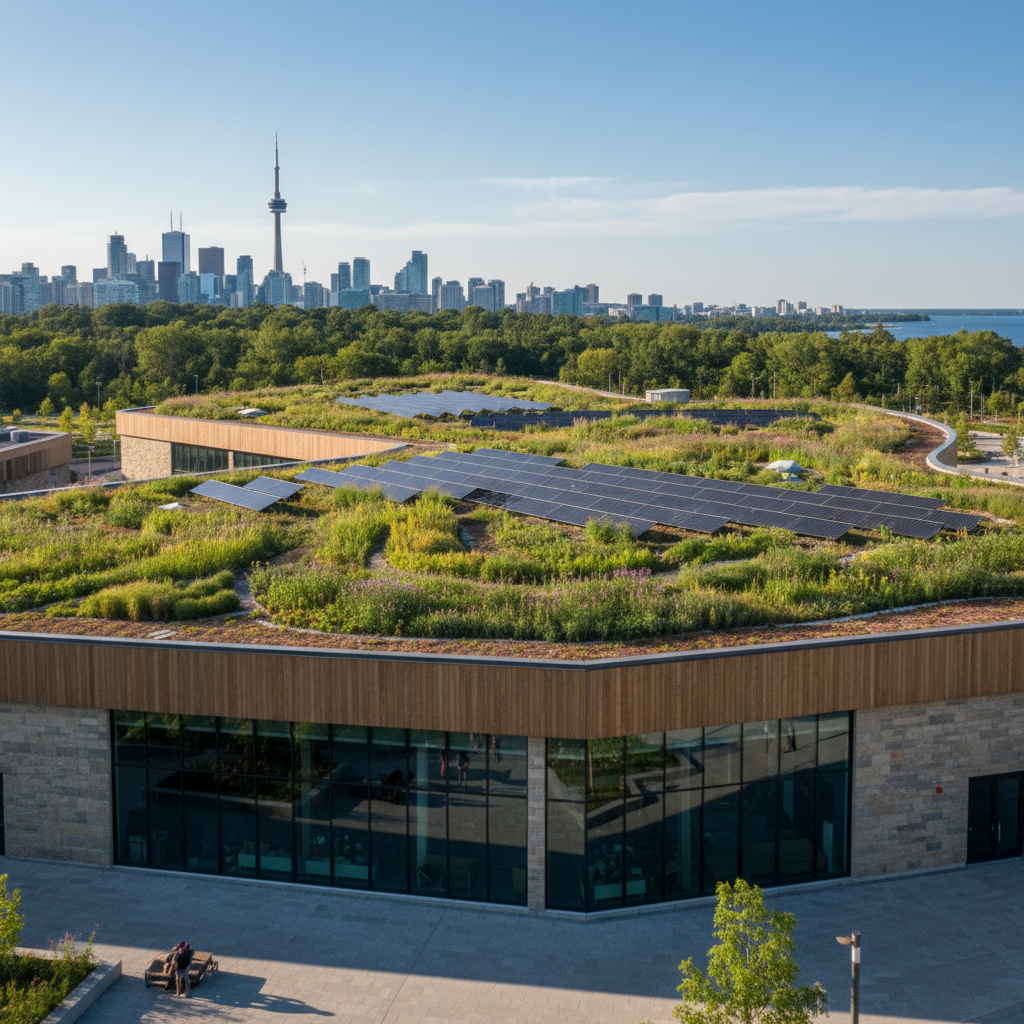
Green roofs reduce stormwater runoff, insulate buildings, extend roof membrane life, and create habitat for pollinators.
Urban tree canopy
Trees are perhaps the most familiar form of green infrastructure. A single large tree can intercept thousands of litres of rainfall per year, transpire water that cools the surrounding air, filter pollutants, and sequester carbon. Protecting existing trees and planting new ones is one of the most cost-effective green infrastructure investments a community can make. See our guide to urban tree canopy for a deeper look at this topic.
Constructed wetlands and naturalized detention areas
Larger-scale green infrastructure includes constructed wetlands that treat stormwater through biological processes, and naturalized detention ponds that replace the conventional concrete-lined basins found in many Ontario subdivisions. These features support biodiversity while managing water.
Benefits Beyond Water Management
While stormwater is often the primary driver for green infrastructure investment, the benefits extend far beyond drainage:
- Cooling: Vegetation and permeable surfaces reduce the urban heat island effect, lowering summer temperatures and reducing energy demand for air conditioning.
- Air quality: Plants filter particulate matter and absorb gaseous pollutants.
- Habitat: Rain gardens, green roofs, and naturalized areas create stepping-stone habitat for pollinators, birds, and other wildlife in otherwise hard-surfaced urban landscapes.
- Mental health: Access to vegetation and natural water features supports psychological wellbeing, a benefit that is well documented in public health research.
- Property values: Well-designed green infrastructure features increase the attractiveness and market value of adjacent properties.
Ontario Policy and Funding
Ontario's regulatory landscape increasingly supports green infrastructure. The Clean Water Act and provincial stormwater management guidelines encourage low impact development approaches. Many conservation authorities now require or incentivize green infrastructure in new developments within their jurisdictions.
Funding sources include the Federation of Canadian Municipalities' Green Municipal Fund, the Ontario Community Infrastructure Fund, and local conservation authority grant programs. At the residential scale, some municipalities offer rebates for rain barrels, rain gardens, and residential stormwater management projects.
Getting Started
For municipalities new to green infrastructure, the best approach is to start small and visible. A demonstration rain garden at a municipal building, a permeable paving pilot in a public parking lot, or a green roof on a new community centre creates a local example that builds public understanding and political support.
For homeowners, a rain garden in the front yard or a permeable patio in the backyard is a practical first step. Disconnecting your downspout from the storm sewer and directing roof water into a planted area is one of the simplest and most effective things any Ontario homeowner can do.
Green infrastructure works best when it is integrated into the community fabric from the beginning of planning and design, not added as an afterthought. The communities that embrace it early will be better prepared for the weather patterns Ontario is already experiencing.
Frequently Asked Questions
What is the difference between green infrastructure and grey infrastructure?
Grey infrastructure refers to conventional engineered systems like pipes, culverts, and concrete channels that move stormwater away quickly. Green infrastructure uses natural processes like infiltration, evapotranspiration, and storage to manage water where it falls. Many modern systems combine both approaches for the best results.
How much does green infrastructure cost compared to traditional systems?
Initial installation costs vary by project. Rain gardens typically cost $10 to $40 per square foot, while permeable paving costs 10 to 30 percent more than conventional asphalt. However, green infrastructure often has lower lifecycle costs because it reduces the size of pipes and detention ponds needed downstream and provides additional benefits like cooling and habitat.
Does green infrastructure work in Ontario winters?
Yes, though performance varies seasonally. Rain gardens and bioswales function during freeze-thaw cycles in spring and fall. Permeable pavement can reduce ice formation because water drains through rather than pooling on the surface. Green roofs provide insulation year-round. Designs should account for frost depth, salt use, and snowmelt volumes.
Can homeowners install green infrastructure on their own property?
Absolutely. Rain gardens, rain barrels, permeable driveways, and native plantings are all residential-scale green infrastructure. Some Ontario municipalities offer rebates or grants for residential stormwater management projects. Check with your local conservation authority or municipal stormwater department.